04/21/2026 • 5 min read
Hybrid Education & the Future of Campus Spaces
Insights from educators and designers on what works
Campuses continually evolve as educators seek the best ways to prepare students for the future. A widespread shift to a hybrid model—can attend classes in person and/or online—is the latest major challenge. In a discussion hosted by Haworth, a panel of higher-education leaders, designers, and planners shared how they're responding. Their candid responses revealed emerging strategies, lessons learned, and trade-offs that come with designing hybrid learning spaces.
The panel included:
- Hannah Jefferies , Director of Interior & Relocation Planning at Washington University School of Medicine in St. Louis
- Lindsey Buening , Instructor/Interior Design, Maryville University of St. Louis
- Brian Pelcak , Instructor/Architectural Technology, Ranken Technical College
- Mariela Tapia-Alpaslan, Director/Engineering & Design, St. Louis Community College
- Tara Turnage , Adjunct Instructor/Interior Design, Stevens Institute of Business & Arts
- Marciann Patton , Senior Instructor/Interior Design, Missouri State University
Here are key insights shared by the panel:
Gear Spaces for Collaboration and Connection
In every discipline, today’s students—who are tomorrow’s professionals—need to gain knowledge and develop interpersonal skills.
“Campus learning spaces continue to be more focused on supporting collaboration now,” Jefferies said. “There’s not as much lecturing from the front of the room. Professors often record their lectures in advance and post them online. Students will watch them before class, and class is more of a discussion. The furniture in these spaces and the flexibility of layout is intentional to support student collaboration.”
Campus learning spaces support more than content delivery. Several panel members noted that effective educational spaces support the development of interpersonal communication skills. To achieve this goal, they create places that provide opportunities for students to interact with each other as well as faculty.
“It is really important for the faculty and the students to intermingle—not just make an appointment to come in and talk,” said Patton. What’s needed are places where instructors can relax and be available for conversation.
Student and faculty engagement often happens outside the formal classroom. To help keep students engaged while they’re off-campus, many instructors are available via text messaging for real-time or asynchronous discussion. For example, a design student working on a project may send a picture of a particular project they’re working on to get feedback. Free-flowing conversation like this strengthens relationships between students and faculty and helps students maintain their momentum.
Specialized Spaces Encourage Students to Stay on Campus
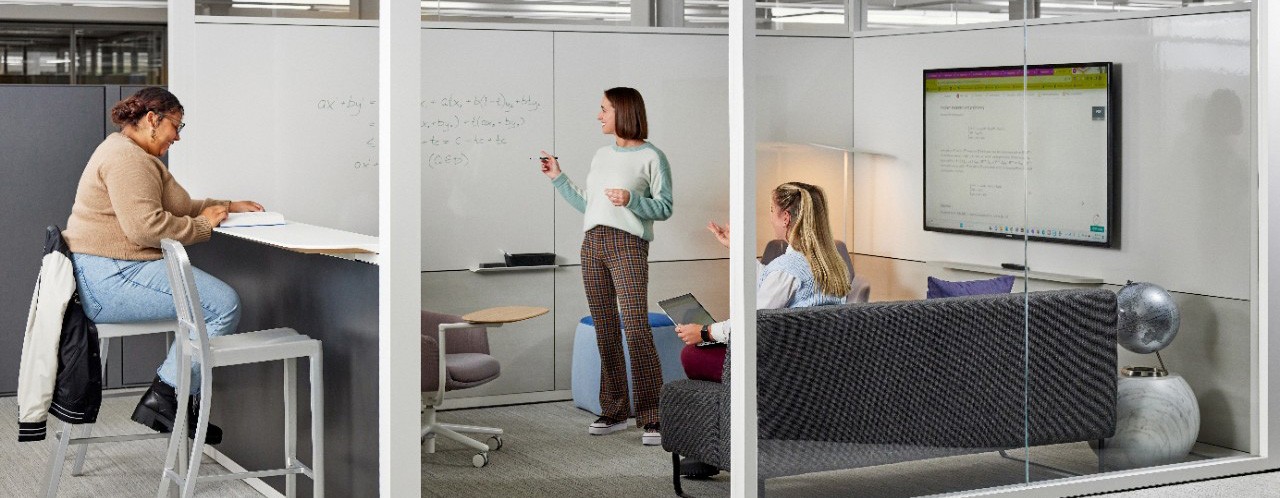
In fields of study where students must prepare for hands-on work, specialized spaces provide experiences that model what students will experience on the job. Studios for designers, huddle rooms for medical and nursing students, and workshops for construction students provide opportunities for experiential learning that can’t be gained any other way.
In the trade programs at Ranken Technical College, workshops are more like studios. To encourage student and faculty interaction, offices are located right off each studio. Instructors are visible and accessible.
“We encourage our students to hang around,” Pelcak said. “We want our students to stick around as long as they're comfortable or capable because the environment supports their access to the faculty. If they have questions, it's a lot easier to answer them in person.”
Adapting for Learning That Happens Anywhere
A key point of discussion was the agreement that learning happens anywhere on today’s campus.
Educators and planners recognize that students don't have to be in the classroom to be in class. This often leads to discussions around remote learning from off-campus locations. But, it could actually mean that students are learning in other on-campus spaces.
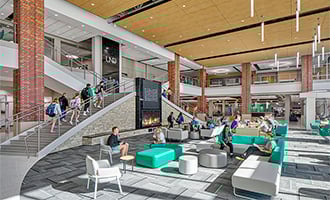
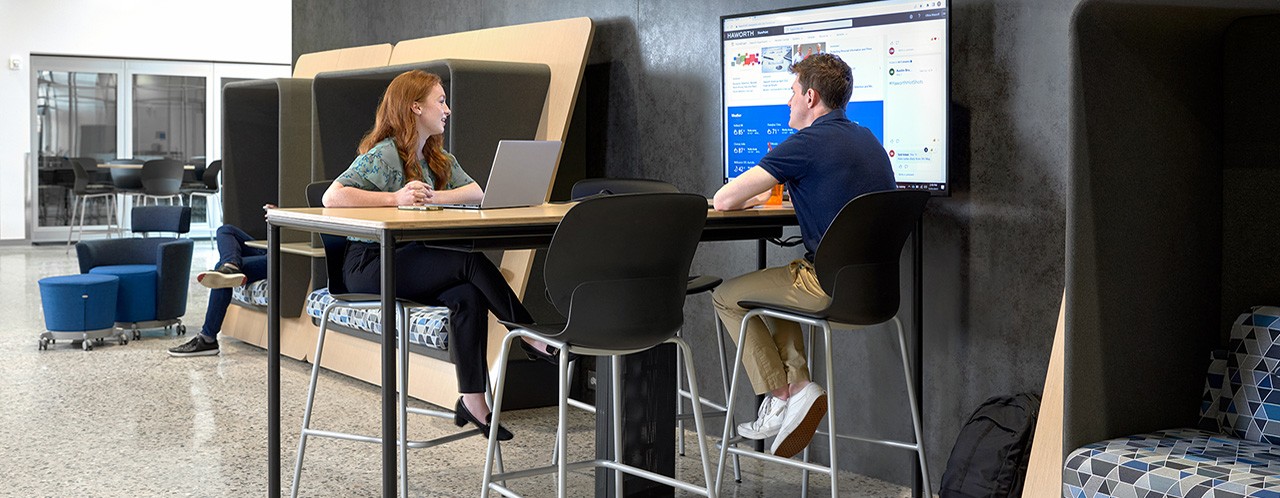
“Our interstitial or transitory spaces are now becoming learning spaces because of the blended way we’re doing education on ground and online,” Buening said. “A student can be in class on their iPad in the hallway lounge.”
Making Campus a Place Students Want to Be
Students who are involved on campus report higher levels of connection and satisfaction. Space design plays a critical role in making campus a place students want to be.
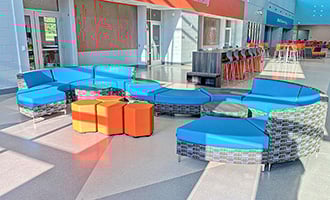
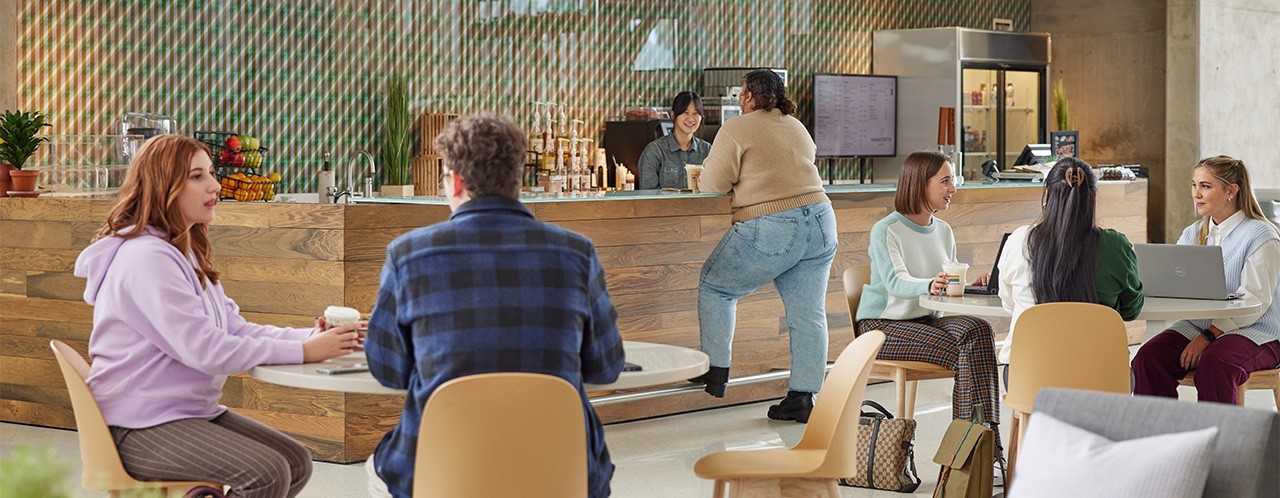
The panelists described student-centric facilities outside of traditional learning spaces as key elements in encouraging students to spend more time on campus. These include activity-focused spaces like fitness centers and video game rooms, as well as dining rooms with food vendors and informal areas for relaxation and conversation.
At Maryville University of St. Louis, a spiritual center supports the school’s neurodiverse population. “It’s a safe space for students to go and they feel like their wellness is supported,” Buening said.
Tapia-Alpasian noted that some colleges have diverse student populations that include parents. “Childcare is very important for community colleges and helps keep students on campus,” she said.
Providing spaces that support all three dimensions of belonging—social, academic, and institutional—help students thrive and succeed.
Repurposing Space
On many campuses today, it’s preferable to repurpose space rather than renovate or relocate facilities. In particular, many schools with limited budgets often turn to adapting spaces to meet changing needs.
Schools of all sizes grapple with fluctuations in enrollment and how many students are on campus versus attending class online. This often leads to many classrooms not being used to full capacity. When educators find that classrooms designed for 30 may only host ten students in-person, they look for ways to convert underutilized areas.
Institutions face two challenges when repurposing space. The first is that spaces customized for a specific program, such as nursing, cannot easily be repurposed for other uses. The second challenge is that sometimes there is resistance to adapting a space for a new use, especially if it has been used in a certain way for a long time.
When changing the purpose of a space, it’s critical to get student and faculty input. “Who better than the one that lives in that space knows what is needed,” said Tapia-Alpasian. “Definitely get the voice of whoever is going to occupy that space—and that includes students, faculty, and staff.”
Exploring New Concepts in Education Spaces
It’s very clear that our panel of experts approaches the evolution of education spaces with curiosity and ingenuity. Evidence of their willingness to experiment, seek feedback, and make iterations shows up in the pilot projects they’ve pursued.
Here are a few of their successes:
Transformation of a historic building – When design students at Stevens Institute of Business & Arts go to the library, they enter a building located in the historic garment district of St. Louis. “It has the old factory look. It has the old brick, and the wood was restored. Students can see how it used to look before. The physical building becomes part of their educational experience,” said Turnage.
Implementation of booking systems to use space more efficiently – Scheduling systems and hoteling reduce inefficiency of rooms going unused and ensure that people who need access to space get it. Capturing user input can help define the best application for booking systems based on user group or defined needs.
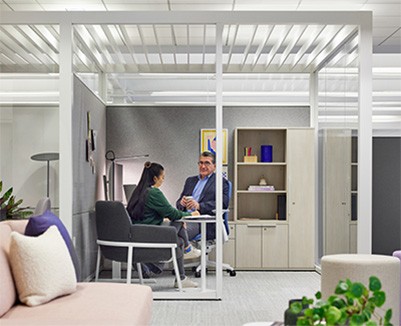
A trial of acoustic pods led to a new proctoring option – When Hushoffice pods were introduced at a major university, the original intent was to test the concept and validate the need for private study spaces. Educators found that the pods also provided accommodation for students taking exams. In response, the school added ten more acoustic pods for proctoring exams.
Using data to inform space decisions – The panel highlighted how collecting data on space usage through surveys, observation, and technology can support more informed planning decisions. Data from occupancy sensors and scheduling systems helps institutions better understand how spaces are actually used and identify opportunities to improve space utilization.
People are natural problem solvers. They're walking around spaces that they are accountable for and own. They're solving these problems anyway. Relying on input from those solutions has been helpful for us.
Lindsey Buening
When designing, renovating, or repurposing learning spaces, our panel had one more recommendation: Try before you buy. The panelists recommended running pilots to get feedback before full implementation. Good ideas become great ones when they’re fine-tuned. Using the results of pilot projects helps inform design decisions.
Pilot programs paired with feedback provide a low-risk way to ensure the final design meets our highest goal: helping students thrive and develop the skills they need for a bright future.
More on Haworth Learning
Our family of brands provides complete solutions to help students, faculty and staff succeed. We’d love to help you create a great hybrid space for learning.