06/01/2026 • 5 min read
7 Insights into How People Work in Offices Today
Findings from Haworth’s 2026 Global Employee Experience Survey
Modern knowledge work is dynamic, with workers distributed across space, time zones, and workstyles. The office needs to match this energy to keep up. Static, homogenous space design no longer makes the cut.
To understand how best to accommodate today’s varied ways of working, Haworth researchers set out to learn which activities people perform in the office, how much importance they place on those activities, and how well their spaces support them.
Here, we share key insights from the 2026 Global Employee Experience Survey, informed by more than 3,300 responses from office workers across 20 industries worldwide.
Insight 1: Independent tasks need focus-oriented spaces
Haworth categorizes work activities into 3 broad types:
- Focus: Individual, heads-down work
- Collaborate: Group learning and execution
- Restore: Socializing or recharging cognitive bandwidth
Participants reported spending 48% of their time on focus work, 30% collaborating, and 22% restoring.
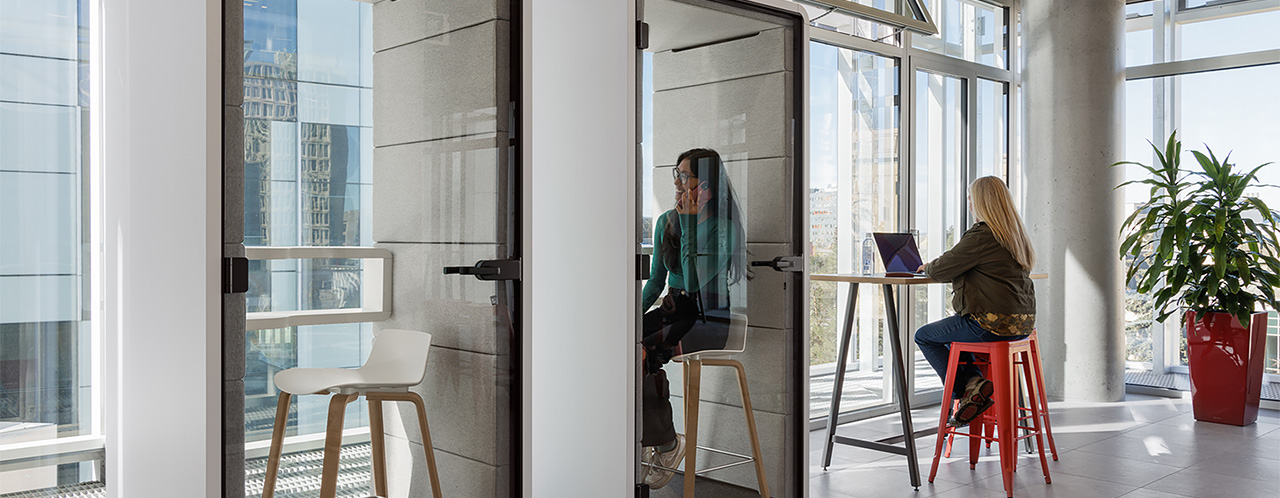
Because focus work occupies the largest share of the workday, offices should dedicate the greatest proportion of resources to high-performing individual spaces. This aligns with findings from Haworth’s 2025 Evolving Workplace Global Study, which showed workplaces comprised of 54% individual, 29% group, and 17% social/restorative spaces.
As a result, organizations should maximize and optimize focus spaces, without sacrificing the other space types required to support the full range of work activities.
Insight 2: Restorative activities are foundational to employee success
While focus work is most valued, restorative activities account for roughly one-fifth of the workday. These include informal socializing, meals, and breaks. Notably, 92% of respondents said restorative activities are at least slightly important.
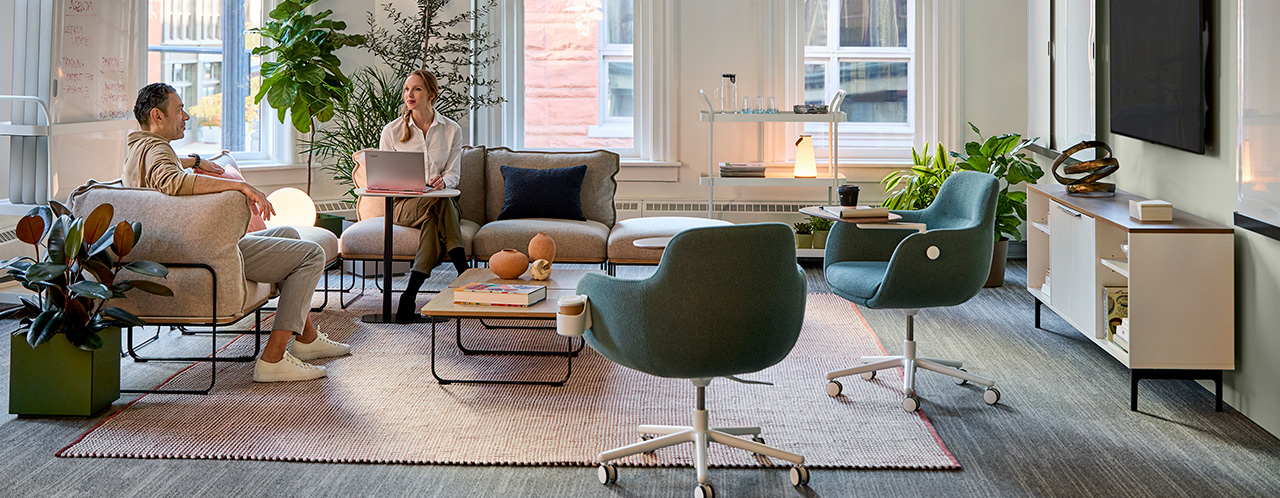
Restorative spaces may include wellness rooms, lounges, cafés, and outdoor areas. Restorative qualities can also be layered into work-heavy environments, such as offering access to natural daylight or adding informal seating at the ends of benching rows to encourage conversation.
Insight 3: Private offices remain desirable
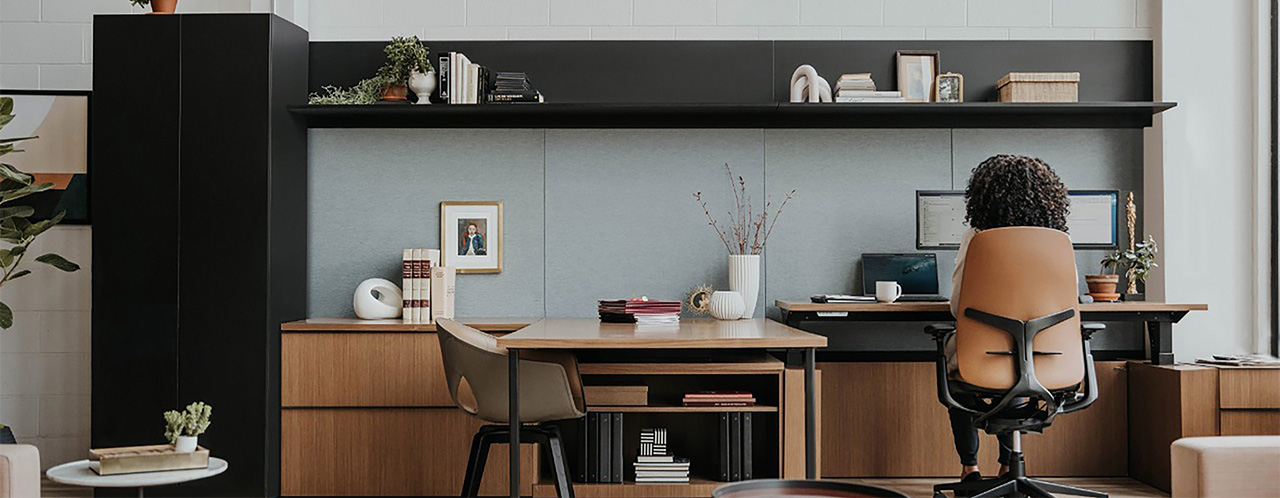
When asked where they perform various activities, respondents frequently cited private offices for deep work, routine tasks, creative work, and even individual breaks. Participants also reported feeling more supported in these spaces than at desks in open areas.
High utilization of private offices was consistent across roles—from senior leaders to individual contributors. This suggests that access to private space is driven less by hierarchy and more by the needs of the task at hand.
Where private offices are not feasible, designers can incorporate their most effective features into open plans. Designated quiet zones, sound-absorbing materials, and furniture that blocks sightlines can significantly improve focus and comfort.
Insight 4: The office is preferred for most activities—except restoration
Despite the flexibility of working from home, respondents showed a strong preference for the office when performing most work activities. Presentations, project execution, and mentoring ranked highest for in-office work. These collaborative activities benefit from face-to-face interaction, nonverbal cues, and shared physical tools—all of which contribute to more effective outcomes.
Restorative activities were the only category preferred at home, likely due to the privacy and familiarity of the home environment. To better support restoration at work, organizations should ensure employees have ample opportunities to recharge and relax.
Insight 5: Unassigned work can diminish employee experience
Unassigned work models (such as hoteling or hot-desking) offer real estate efficiencies but present challenges for employees. Respondents associated unassigned work with lower productivity and a reduced sense of belonging.
These effects may stem from limited ownership over space, weaker team connections, and the time required to find suitable places to work each day.
Providing a wider range of spaces that better support multiple activities can help mitigate these challenges. Among unassigned workers, we found a moderate positive relationship between perceived workspace support and sense of belonging—indicating that improved space quality and variety can meaningfully enhance the employee experience.
Insight 6: Work team culture shapes how much the workplace matters
The Competing Values Framework is an established lens for understanding the 4 major types of team cultures and how they get work done:
- Collaborate: Long-term relationships
- Create: Innovation and flexibility
- Control: Processes and hierarchy
- Compete: Speed and precision
Using this framework, we examined several key variables. We found that Create and Collaborate cultures placed greater importance on workplace quality, felt more supported by their spaces, and experienced higher productivity and belonging than Control and Compete cultures.
This difference reflects the role of space in enabling these cultures. Create teams rely on physical tools and environments that support experimentation, while Collaborate cultures thrive on in-person interaction with teammates. In contrast, Control and Compete cultures are more driven by processes and structure, relying less on their physical environment. As a result, supportive workplaces tend to have a greater impact on more flexible cultures than on more rigid ones.
Insight 7: Workplace support drives engagement and satisfaction
The quality of participants’ workplaces was highly related to their desire to work for their organization. When employees feel supported by their spaces, they enjoy greater productivity and belonging, leading to overall satisfaction with their work life.
Investing in high-quality, varied workspaces supports engagement across all knowledge workers and strengthens the employee experience over time.
Designing Workplaces Where Employees Thrive - 2026 Global Employee Experience Report
Discover insights from over 3,300 employees worldwide on how workplace design impacts focus, collaboration, and engagement—and learn how to create spaces that truly support people at work.