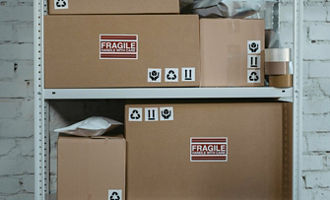
Whether we're walking through our local grocery store or opening a delivery box, we all encounter packaging every day. An unsung hero of global commerce, it protects our products, preserves freshness, and enables safe transport.
But packaging also plays a lead role in one of today’s most pressing environmental challenges: waste. As consumers and companies alike seek greener solutions, the race is on to reimagine packaging for a more sustainable future.
The Packaging Paradox
Sustainable packaging is more than just choosing paper over plastic. It’s a balancing act with complex challenges. Packaging must be strong enough to protect fragile goods, yet minimal enough to reduce waste and transportation emissions.
It should be recyclable or biodegradable, but also cost-effective and scalable. And, it must meet consumer expectations for convenience and aesthetics.
“Packaging is a system,” explains Dr. Rafael Auras, Professor and Amcor Endowed Chair at the Michigan State University (MSU) School of Packaging. “It’s not just the material. It’s how it’s designed, used, and disposed of. We need to think holistically. We need to deliver products with the lowest environmental footprint that we can, with the best protection system we can, globally.”
Dr. Auras leads a research group of graduate and undergrad students at MSU’s School of Packaging, the first, largest, and most comprehensive program of its kind in the world. Originally from Argentina, he combined his background in chemical engineering and materials science to pursue a PhD in packaging at MSU. Today, he and his team are tackling the sustainability challenge head-on.
Packaging Innovation at the Forefront
With nearly 600 students and a global alumni network in the industry, the MSU School of Packaging is shaping the next generation of packaging professionals through research, as well as real-world projects for a range of products and companies.
The school’s research spans everything from biodegradable polymers to life-cycle assessment. Students and faculty explore how packaging materials interact with the environment, how well they withstand shipping and storage conditions, how they break down, and how they can be reused or recycled more effectively.
Their work informs global industry standards and helps companies make smarter, more sustainable choices. “We’re not just studying packaging. We’re redesigning it for a circular economy,” Dr. Auras says.
A Breakthrough in Plastic
Plastic packaging can linger in landfills for hundreds of years. Even bio-based, compostable plastics like those made from poly (lactic acid), or PLA, usually need high heat and industrial composting to break down. But researchers at MSU’s School of Packaging have changed the game with their breakthrough research. By blending PLA with a plant-based starch, they created a plastic material that microbes can digest more easily, even in cooler, homecomposting conditions. This means less plastic waste, fewer microplastic leftovers, and a big step toward packaging that truly disappears.
Real-World Impact
MSU’s work isn’t just academic—it’s applied. The school partners with companies and commodities groups across industries. Some projects are proprietary, others are published, but all aim to solve real-world problems.
One example: helping mango producers ship the delicate fruit from groves in South America to the US without spoilage. Another: working with a Michigan based pharmaceutical company to improve over the-counter packaging.
MSU also collaborates with a major appliance manufacturer to simplify packaging systems and reduce waste. Students gain hands-on experience through capstone projects, as well, where companies bring real challenges to the classroom. These collaborations help shape the next generation of packaging professionals.