01/13/2026 • 6 min read
Renaissance in Motown
How design is powering Detroit’s comeback
Detroit is reimagining itself. Once the icon of urban decline, the city has become a proving ground for visionary design, bold investment, and community-driven renewal. At the heart of this transformation is a new generation of architects and designers who see Detroit not as a cautionary tale, but as a canvas.
Designing Detroit’s Future
Few are shaping that canvas more decisively than James Witherspoon, Senior Vice President of Architecture and Design at Bedrock, a real estate firm at the forefront of Detroit’s revival. Founded by Dan Gilbert, Bedrock has transformed dozens of historic and underutilized properties into vibrant hubs of culture, commerce, and community, making it one of the most influential forces in the city’s redevelopment.
For Witherspoon, architecture goes beyond the buildings. “Cities are living organisms,” he says. “They evolve, respond, and reflect the people who inhabit them.” That philosophy underpins Bedrock’s approach to development: one that honors Detroit’s architectural legacy while pushing it into a future defined by density, sustainability, and human connection.
Ready to Read More?
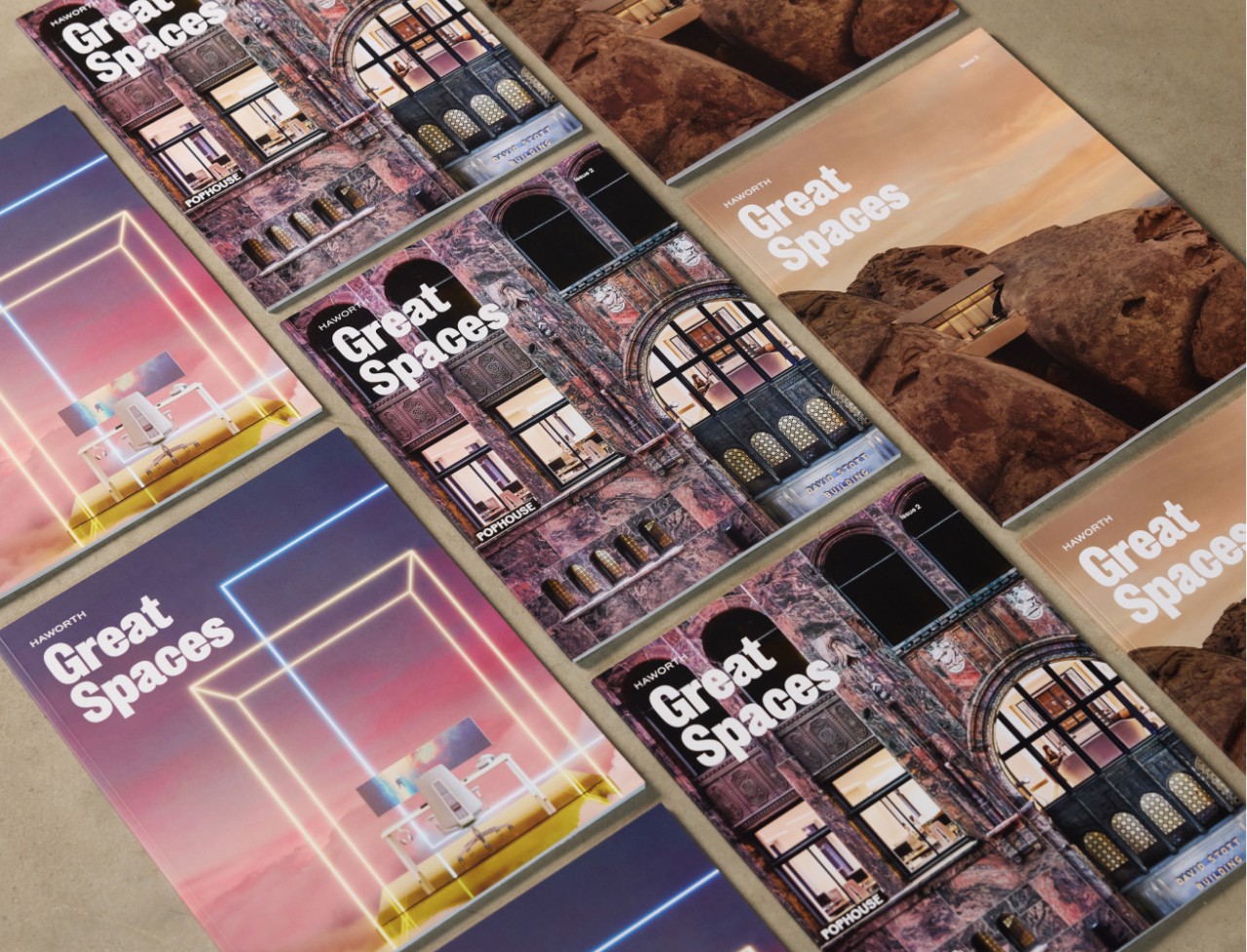
Great Spaces Magazine features unique design perspectives, thought leadership, and profiles of style makers from around the world. Subscribe to receive a print version or download a digital version to begin exploring.
Breathing New Life into Historic Spaces
When Witherspoon arrived in Detroit as an architecture student, he was captivated by the city’s early 20th-century skyscrapers—many of them vacant, but still structurally sound and rich with character. In his role at Bedrock, he’s leaned into adaptive reuse. Rather than leveling these historic sites, Bedrock is breathing new life into old bones.
Take Detroit’s Book Tower. Previously vacant for nearly a decade, the building now pulses with energy, thanks to a sweeping transformation led by Bedrock. The development team reimagined the space as a place to live, gather, celebrate, and explore. Apartments, extended-stay hospitality, curated food and beverage offerings, and event venues all coexist in a space that invites movement and connection. “We didn’t want another residential box,” Witherspoon says. “We wanted a destination.”
This blend of uses is strategic. Urban vitality depends on density. When people live, work, and socialize in proximity, neighborhoods become more resilient, more attractive, and more alive. Bedrock’s developments are engineered to foster that kind of interaction.
Hudson’s Detroit: A Landmark of Renewal
Few projects embody Detroit’s rebirth like Hudson's Detroit. In 2009, Witherspoon lived across the street from a vacant lot, imagining what might rise from its emptiness. Today, it’s home to a major mixed-use development that includes office space, retail, and public areas. It’s a turning point for Woodward Avenue—a corridor now buzzing with foot traffic, new businesses, and renewed purpose.
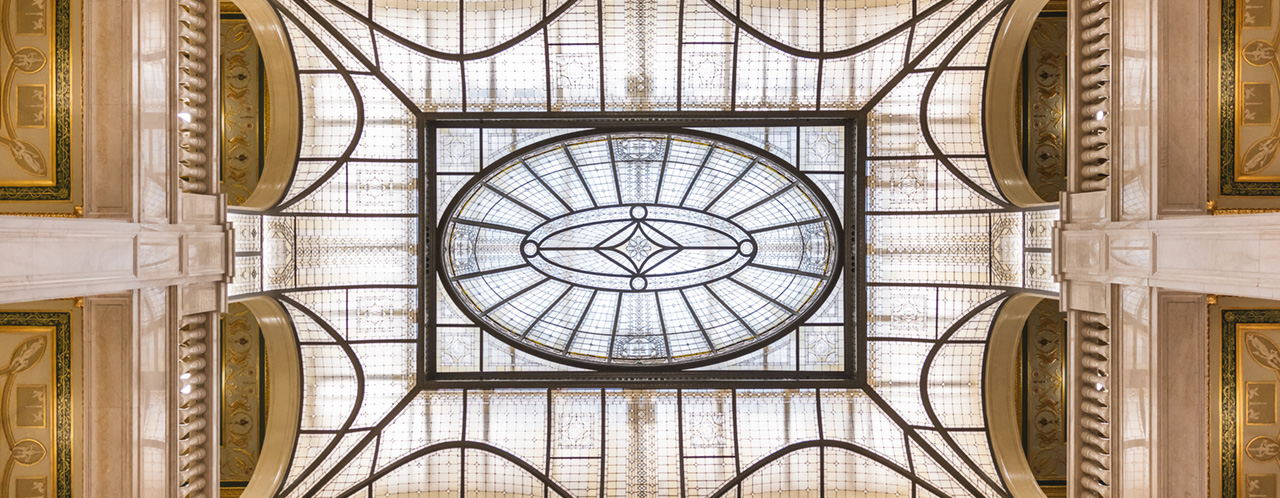 Book Tower atrium ceiling. Photo courtesy of Bedrock.
Designing for People & Well-Being
Jennifer Janus, President of Detroit-based design firm Pophouse, echoes this sentiment. Her firm designed the interiors of Hudson’s common spaces, including a soaring atrium filled with full-grown trees. “It’s meant to be a flexible space for connection and well-being,” she says. “It’s going to help densify the area even more. It’s a symbol of Detroit’s revitalization.”
Detroit’s resurgence is defined as much by process as by progress. At Bedrock, it begins with listening. Community meetings come before major projects, and local voices help shape what follows. “We don’t assume we know what people want,” Witherspoon says. “We ask. We adapt.”
City Modern, a community located in Detroit’s Brush Park neighborhood, is a case in point. The development evolved significantly through community input, resulting in a space that reflects the needs and aspirations of its residents. This collaborative approach builds trust between people and organizations, and builds places that feel authentic.
Janus sees the same dynamic in her work. “Design is a nod to how you feel about the people working in your space,” she says. “Do you care about them? Do you want them to have a good experience?” Pophouse’s own office in the historic David Stott Building was designed with employee input, creating a space that draws people in rather than mandates their presence.
Sustainability with Staying Power
That same commitment to community shows up in how Bedrock approaches sustainability. The company treats it as a long-term investment in both place and people. Decisions are shaped by the expectation that these buildings will remain under their care for decades. “These buildings will be around for a long time,” Witherspoon says. “That changes how we make decisions. We focus on quality and longevity.”
Adaptive reuse plays a key role here, keeping materials out of landfills and reducing the carbon footprint of new construction. High-performance building systems reduce energy consumption and improve operational efficiency.
Bedrock is also expanding its focus toward biomedical research and innovation. Platforms like the Urban Tech Xchange and the Detroit Smart Parking Lab support startups in mobility and smart city technologies, keeping Bedrock connected to emerging trends.
Janus sees similar momentum in healthcare and research. Pophouse is currently working on the Nick Gilbert Neurofibromatosis Research Institute, a research lab in partnership with Michigan State University and Henry Ford Health. “Detroit has historically been tied to automotive,” she says “but now we’re seeing diversification into new markets. It’s a unique time.”
A Shared Purpose Driving Detroit’s Revival
Detroit’s design community thrives on shared purpose. “We’re all in it for Detroit,” Janus says. “We’re working together to make the city stronger.” That spirit was on full display during the 2024 NFL Draft, which brought hundreds of thousands of visitors downtown and showcased Detroit’s capacity to host large-scale events.
Witherspoon sees these moments as affirmations. “People come here because they want to be part of something larger than themselves,” he says. “There’s a shared energy and optimism you can feel when you walk through the city.”
Design as a Force for Equity
Pophouse’s work with Humble Design—a nonprofit that helps families transition out of homelessness by furnishing homes—illustrates how design can be a force for equity. “It’s a tangible way to see the impact design can make,” Janus says. “We work with partners and even competitors to support these efforts. It’s about coming together.”
That ethos resonates with Bedrock’s approach. By investing in places that matter to people, and by involving those people in the process, design becomes transformational.
The Energy of Possibility
For designers, architects, and real estate professionals, Detroit offers a rare opportunity: the chance to shape the future of a major American city. The work being done here is focused on creating spaces where people can live well, connect with others, and feel a genuine sense of belonging.
“You have to see it for yourself,” Witherspoon says. “The energy, the creativity, the sense of possibility—it’s all here.”
Subscribe to the Magazine
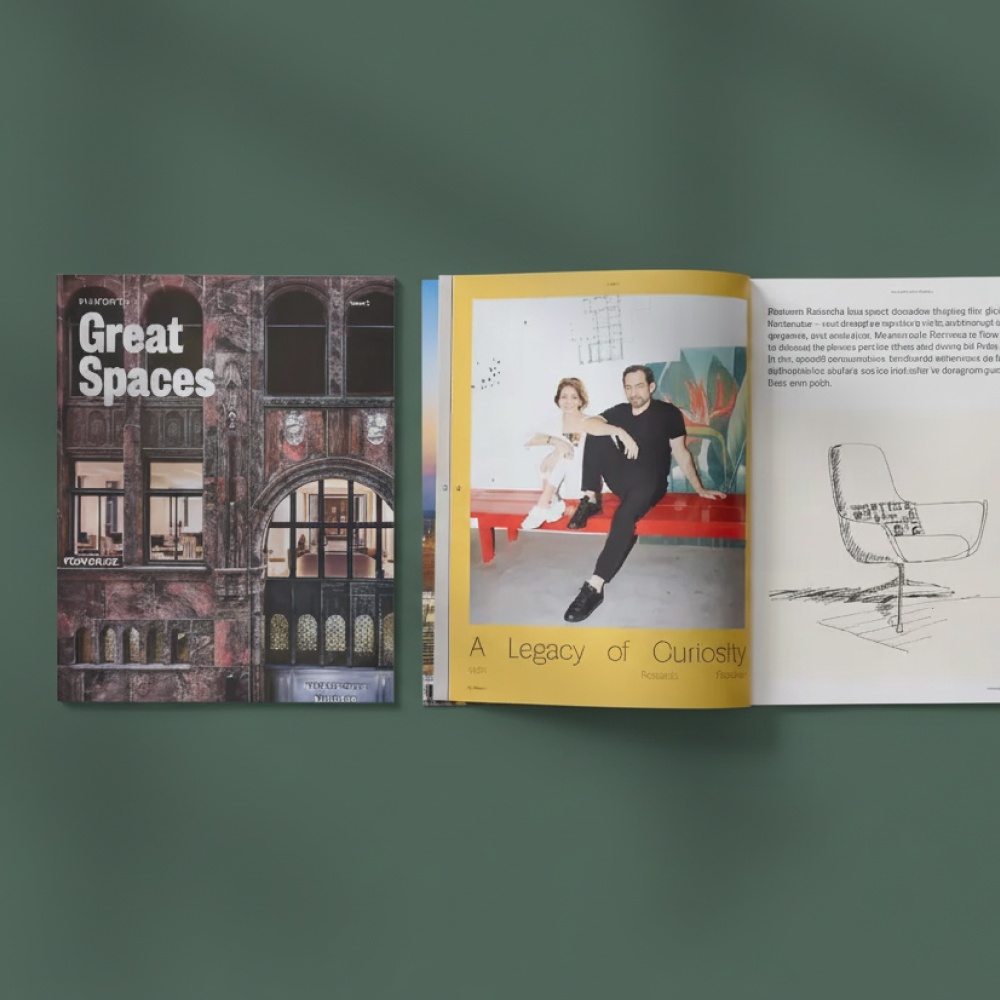
Great Spaces magazine features unique design perspectives, thought leadership, and profiles of influential designers from around the world. Fill out the form below to subscribe to Great Spaces. Choose to receive print copies in the mail, download digital versions, or both.
Thank you for subscribing! Your first issue is on its way.