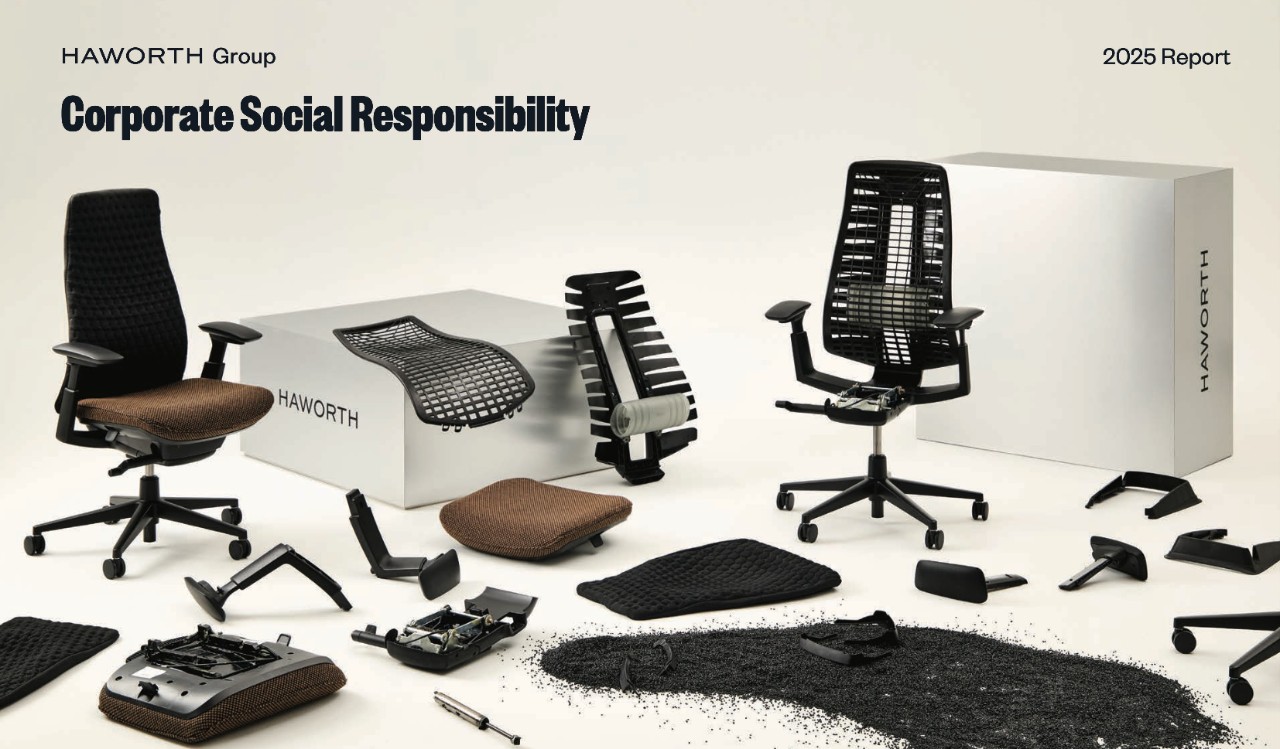
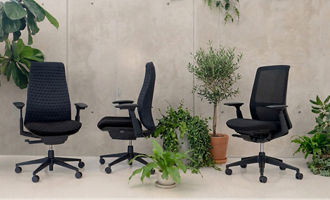
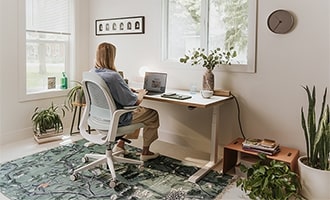
For those involved in creating or specifying commercial spaces, sustainable product choices are no longer a niche consideration—they’re a core expectation. Balancing aesthetic preferences, budget constraints, and performance requirements with the increasing pressure to meet ambitious sustainability goals across projects can be challenging.
Researching and verifying sustainability claims can be time-consuming and confusing. Fortunately, there's a streamlined solution: BIFMA LEVEL® certification.
BIFMA LEVEL is a comprehensive, multi-attribute sustainability standard specifically for commercial furniture. It evaluates the environmental and social impacts of a product throughout its entire lifecycle, from material extraction and manufacturing to end-of-life management. This includes assessing the company's overall sustainability practices and the performance of the manufacturing facility.
Why BIFMA LEVEL Helps
- Third-Party Assurance: BIFMA LEVEL provides assurance that products have been rigorously assessed and verified by an independent third party for their sustainability attributes. This eliminates the need for you to conduct extensive individual research and provides confidence in the product's environmental performance.
- Holistic Sustainability: The standard considers a wide range of factors, including material health, energy use, emissions, and social responsibility. Notably, Haworth’s BIFMA LEVEL 3 certified products have undergone rigorous lifecycle analysis and material chemistry transparency assessments. This holistic approach ensures that you're specifying products that are truly sustainable across all key areas of impact.
- Healthier Indoor Environments: BIFMA LEVEL certified products must also meet stringent low-emission requirements, contributing to improved indoor air quality and a healthier environment for building occupants.
- Peace of Mind: Specifying BIFMA LEVEL certified products provides peace of mind, knowing that you are making responsible and informed choices that align with your sustainability values and goals.
Haworth's Commitment to BIFMA LEVEL
Haworth recently recertified its products to BIFMA LEVEL. As part of this effort, all products were recertified to LEVEL 3—the highest achievable level in the 2019 version—demonstrating Haworth’s strong commitment to circular product design, continuous improvement, and the integration of a high degree of sustainability performance into its processes.
Over 97% of Haworth’s products by sales volume are BIFMA LEVEL 3 certified. More information is available on certifications or sustainability documentation for specific products, Haworth also provides an accessible database of product information through its Ecomedes resource.
Integrating BIFMA LEVEL into Your Workflow:
The easiest way to integrate BIFMA LEVEL into your projects is to include it as a requirement in your specifications.
Below are some ways designers, specifiers, and sustainability teams can consistently apply LEVEL criteria throughout a project:
- Include LEVEL requirements in written specifications in RFPs and bid packages.
- Use LEVEL as a screening tool during product selection.
- To get the most from LEVEL-certified products, align their attributes with other building certification, such as Leadership in Energy and Environmental Design (LEED) the WELL Building Standard (WELL), and the Living Building Challenge (LBC).
- Leverage manufacturer tools that include LEVEL, like a manufacturer Ecomedes page or the mindful MATERIALS Common Materials Framework database.
- Track LEVEL compliance during procurement to set a baseline and set goals to improve performance over time.
- Establish a sustainable design and procurement strategy for your firm and align it to the areas of impact in LEVEL.
Other Sustainability Certifications to Consider
Beyond BIFMA LEVEL, several other well recognized certifications can help address specific sustainability priorities within your projects. Depending on your goals, consider the following:
- Healthier Indoor Air Quality: GREENGUARD® Gold or SCS Indoor Advantage™ Gold
Both certifications focus on chemical emissions and volatile organic compounds (VOC) performance, helping ensure products contribute to healthier indoor environments. They are widely recognized by LEED, WELL, and the Collaborative for High Performance Schools (CHPS) and align with projects prioritizing occupant wellness.
These certifications validate that products meet low chemical emissions and VOC standards, supporting healthier indoor environments.
- Eliminate Problematic Materials: Declare or Health Product Declarations (HPDs)
- Declare labels provide full ingredient transparency, identifying what a product is made of, where materials come from, and whether it contains any Living Building Challenge Red List chemicals.
- HPDs offer detailed ingredient transparency by listing a product’s chemical contents and screened health hazards. They do not certify safety but instead provide information to help teams make informed material selections. HPDs support LEED, WELL, and Living Building Challenge goals focused on material health and chemical reduction.
Multi‑Attribute Focus on Material Chemistry and Circularity: Cradle to Cradle Certified®
Cradle to Cradle Certified® is a registered trademark of the Cradle to Cradle Products Innovation Institute.
Cradle to Cradle evaluates a product across material health, circularity, renewable energy, water stewardship, and social fairness. It offers deep insight into how safe and responsible a product is across its lifecycle.
Forest + Wood Sustainability: Forest Stewardship Council® (FSC®) FSC® License Code: FSC-C002821
FSC certification ensures wood and wood‑based products originate from responsibly managed forests that prioritize environmental health and social responsibility. FSC is often required for LEED credits involving responsible material sourcing.
Putting Sustainability Certifications to Work
Specifying BIFMA LEVEL-certified products provides credible, third-party verification of sustainability performance and attributes, supporting a wide range of project sustainability goals. Pairing LEVEL with other certifications such as GREENGUARD Gold, SCS Indoor Advantage, Declare, or Cradle to Cradle helps align specifications with each project’s unique requirements.