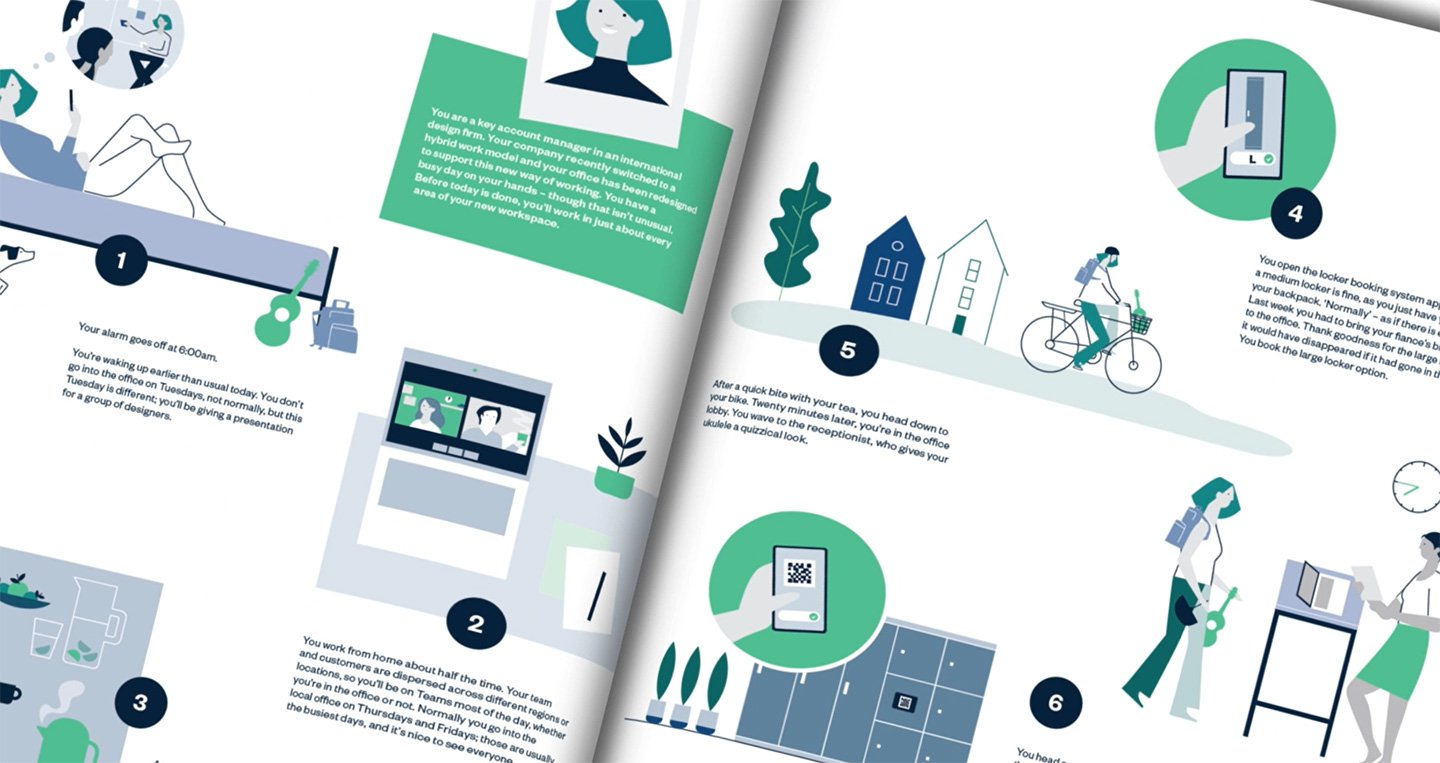
The world of work is becoming more complex each day. Who is working in the office? Who’s at home? Can organizations support hybrid work models that enhance employee productivity while including everyone? Hybrid work has not only shaped the office landscape—it’s also changed the way we live.
In 2025, Leesman, which touts the world’s largest workplace experience database, published its latest report on hybrid work: The Hybrid Future. This research initiative featured 8 distinct campaigns with the overall goal of understanding the new work landscape, uncovering the complexity of hybrid working in the corporate world, and exploring its far-reaching effects on people, organizations, and society.
The global study included 3,988 participants from 8 companies over a 2-year time span. These 5 topics summarize the findings:
1. Impact on Employees
People are an organization’s greatest asset, and the main reason attraction and retention are so important to leaders. In this study, the mixture of motivations and experiences underscore the complexity of hybrid working. For example, many employees like working remotely for work/life balance. It minimizes distractions and issues related to commuting.
The main reason they come into the office is to meet, collaborate, and socialize with others—or because an employer mandate requires them to be there. But when people are in the office, they still struggle with the ability to focus and be productive. And mixed-presence meeting formats—where some attendees are virtual while others are in a room—are still challenging. Most people prefer to be in-person, noting that brainstorming is significantly more effective when people are together, face-to-face.