28/11/2024 • 3 min read

The ‘future is collage’, says Werner Aisslinger

Thoughts on collage, storytelling, and surprise

by Alex Przybyla

Werner Aisslinger is a world-renowned designer known for his narrative, collage-based design philosophy. Werner has worked with the Haworth Group for many years; he designed the long-selling Juli Chair for Cappellini in the late 1990s. Famous Studio Aisslinger projects include the 25hours Hotel in Cologne and the Fotografiska Museum in Berlin.

We were honoured to host Werner for a presentation during the recent Haworth Warehouse Experience in Cologne – if you missed it, find the recap of the event here

Werner Aisslinger is bored by same-old, same-old design. From the beginning, his studio had no interest in making ‘generic design hotels’ that ‘all look the same’ no matter where they are in the world. Instead, Werner wants ‘to talk about storytelling, about experience.’

Studio Aisslinger creates spaces that are ‘easygoing and approachable for everybody.’ The people who move through the space are the protagonists; Werner and his studio do not seize the spotlight. ‘We just create the spaces for people,’ Werner says. ‘We are set designers.’

Set designs are platforms for stories. Studio Aisslinger crafts those stories partly through the curation of curious objects – objects large and small, new and old. Vintage pieces in particular can ‘push the acceptance of a space to a higher level’, Werner says. (By the way – if you’re keeping a list of Ideal Dream Jobs, Werner mentions that Studio Aisslinger has ‘some people in our studio who are just caring about collecting vintage.’ How fun does that sound?)

That narrative collage approach – mixing the old with the new, infusing spaces with unexpected stories, and drawing on the histories of a project’s building and neighbourhood – is central to Werner’s design philosophy. Collage design forges an eclectic harmony – especially when working on international projects, where Werner emphasises working with local artists. ‘We always try to connect to local artists or musicians or vintage dealers or people who are cool in the city, graphic designers, illustrators. It’s a co-op world.’

I am curious about Werner’s early years, when he worked as a freelance designer for several big names. ‘I was Jasper Morrison’s first assistant ever,’ he says, ‘and then I moved to Milan and worked for Michele De Lucchi… these guys were, at the time, they were heroes already. And it was nice to understand how they work, how they see life.’

Design does seem to have changed since those days – at least when it comes to widespread styles and trends. In Milan, Henning mentioned the end of the design mega-trend; Werner has a similar feeling about style. ‘Style is not important anymore,’ Werner says. In the past, ‘there was always a certain style and everybody tried to follow this style. We say the future is collage. It’s always a mix and match of this and that, all new, vintage and classics, and modern design.’

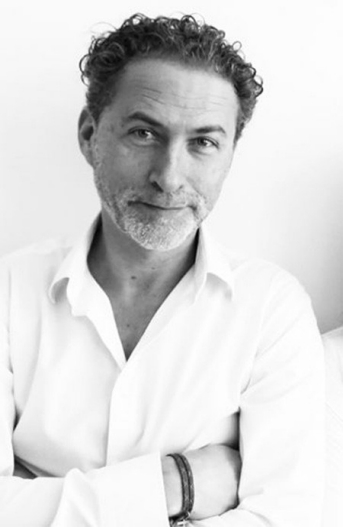
You will find certain consistent qualities in Aisslinger-designed spaces – especially a sense of optimism.

‘We always, always want to do optimistic spaces,’ Werner says, ‘where people feel welcomed and connected and warm.’ That warm human element is often associated with hospitality – but more and more, it seems to be seeping into the world of workplace.  ‘Hospitality,’ Werner says, ‘will influence the world of work in the future. Or is already.’

‘It’s always about humanity,’ Werner says. ‘Interior spaces, workspaces, the more friendly and human they get, the better.’ As hybrid workspaces draw more from the hospitality industry, we can hope that they become more and more human, optimistic, and vibrant.

Toward the end of the talk, we touch on Werner’s work on the Juli chair with Cappellini. Originally launched in 1996 in Milan, Werner and Cappellini revisited the chair over 20 years later. Together, they developed the Juli Re-Plastic – the first 100% sustainable piece of furniture in Cappellini’s outdoor collection.

Revisiting and refining long-selling products is not only attractive from a material innovation standpoint – it also reduces the overall development footprint. ‘Nobody talks about the footprint of product development,’ Werner says. ‘The footprint is not only the product and the lifecycle of a product – the footprint is also developing the product.’

Enjoy the inspiring talk with design legend Werner Aisslinger! 

See more of our Creative Minds series

including a new conversation with Sebastian Herkner and Davide Angeli of AMDL CIRCLE!

Tags:

You May Also Like