09/12/2025 • 5 min read

5 ways to mitigate stress in the workplace

How to mitigate office stress for neurodivergent people

by Alex Przybyla

Spaces that feel right:
5 ways to mitigate workplace stress

When a space is right, we feel it. We might have a sense of peace, we might be especially productive, we might connect ideas in unexpected and creative ways.

It’s just as noticeable when a space doesn’t work. Something feels off, we’re not very productive, our ideas feel blocked. This leads to stress, which often manifests as some combination of emotional masking, rumination or negative anticipation, overstimulation, expectations of social judgment, burnout, or social or conversational anxiety.

And for neurodivergent people, who tend to be significantly impacted by the sensory aspects of an environment, poorly designed spaces can quickly become negative experiences.  

Victor Bourdariat, Haworth’s Lead Designer for Europe, suggests 5 methods to mitigate stress and anxiety in the office. These include thoughtful approaches to colours and patterns, height-adjustable workstations, lighting, privacy, and wayfinding. 

This article builds on What we talk about when we talk about neurodiversity. If you haven’t read it yet, check it out!

Colours and patterns help some and distract others 

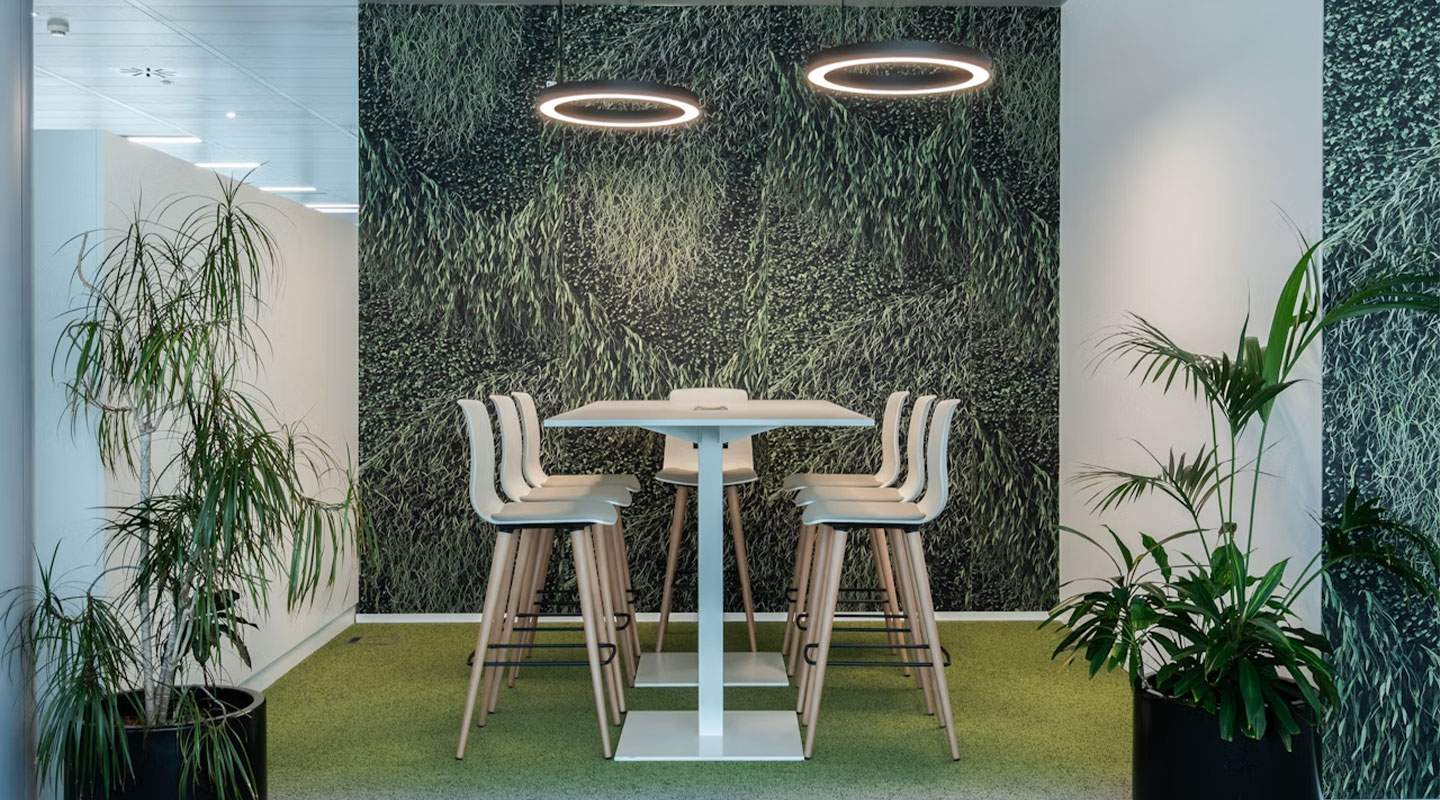
A loud pattern may bring stimulation and creativity to one person even as it causes dizziness and distraction in another. The challenge with inclusive design is that we need to cater both to people who seek boosts and people who seek calm. We want to enhance creativity and imagination with stimulating spaces, but we also need calming, relaxing spaces with low stimulation. 

Victor believes the best option is variety. With a range of separate, shared spaces, people can go to the space or setting they prefer for any given task. This variety is key for increasing flexibility and autonomy, two crucial principles for inclusive design.  


Some people will find this pattern stressful while others will find it soothing. By providing a variety of settings, people can find a destressing space that works for them. 

A considered approach to height-adjustable workstations  

It’s no secret that we are huge fans of height adjustable workstations. HATs offer significant health benefits by letting people change their position throughout the day and avoid sedentary behaviour. And HATs increase agency, because they let people find the work height that’s just right for each task.

At the same time, height adjustable workstations may be distracting for some people. Even with ultra-quiet HATs, ‘the noise of the motor and the constant movement might be problematic,’ Victor says. ‘We want to have HATs – but the question is, should it be part of the same settings? Or should we have settings where it’s fixed, and other settings where it’s height adjustable?’

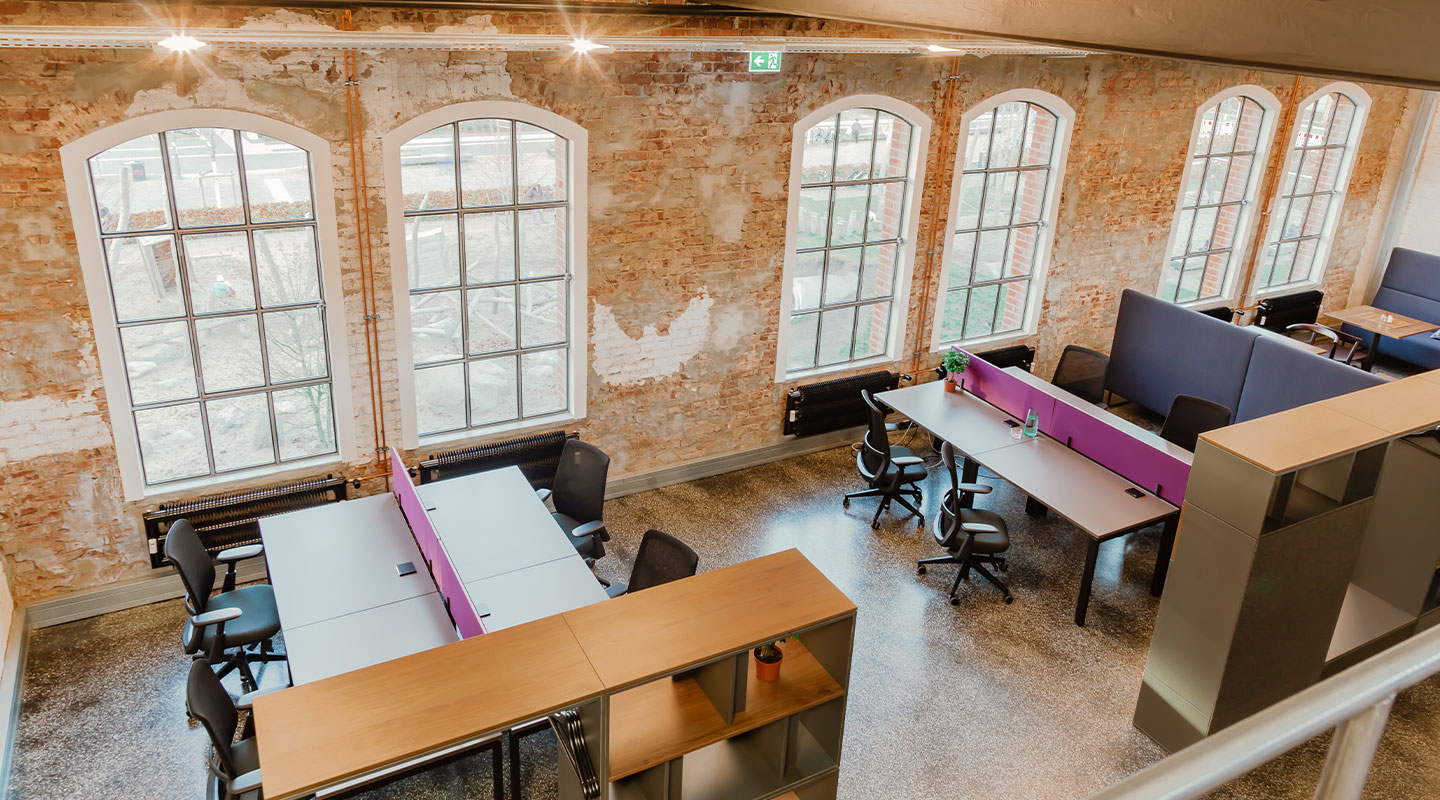
While we recommend HATs for their health benefits and increased autonomy, it’s worth considering having areas with only fixed-height workstations. That way, people who prefer stillness and quiet have the option to work in an area without noisy, moving tabletops.  


People who prefer clean visual lines and less noise might prefer settings with only fixed-height desks. 

Lighting with adjustable brightness and temperature 

Let there be light – warm, bright light, just like I like! Enabling people to control their light settings is an important part of agency. Ideally, people will be able to adjust brightness and temperature. Some people might prefer crisp blue or white light so they can clearly see their screen or papers. Others might want dim, warm lighting for a cosy, homey feel. 

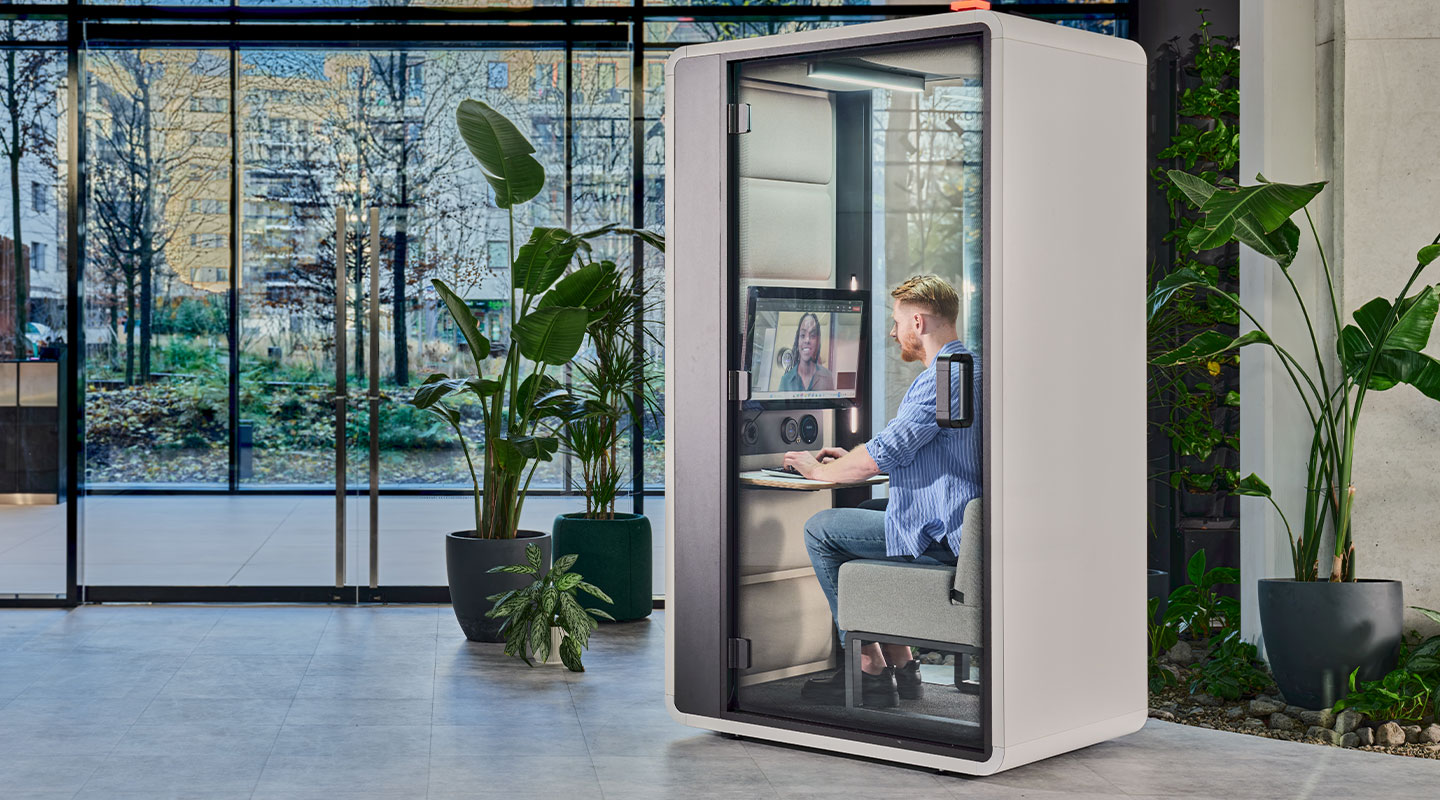
Acoustic pods are a great example of the need for adjustable lighting. Pods are ideal environments for sound and one of the best ways to give people privacy – but if the lighting can’t be adjusted, pods will be far less helpful to some people.

A pod with adjustable lighting will offer acoustic sanctuary and personalised light. 

A pod with adjustable lighting will offer acoustic sanctuary and personalised light. 
Personalised visual privacy with portable screens 

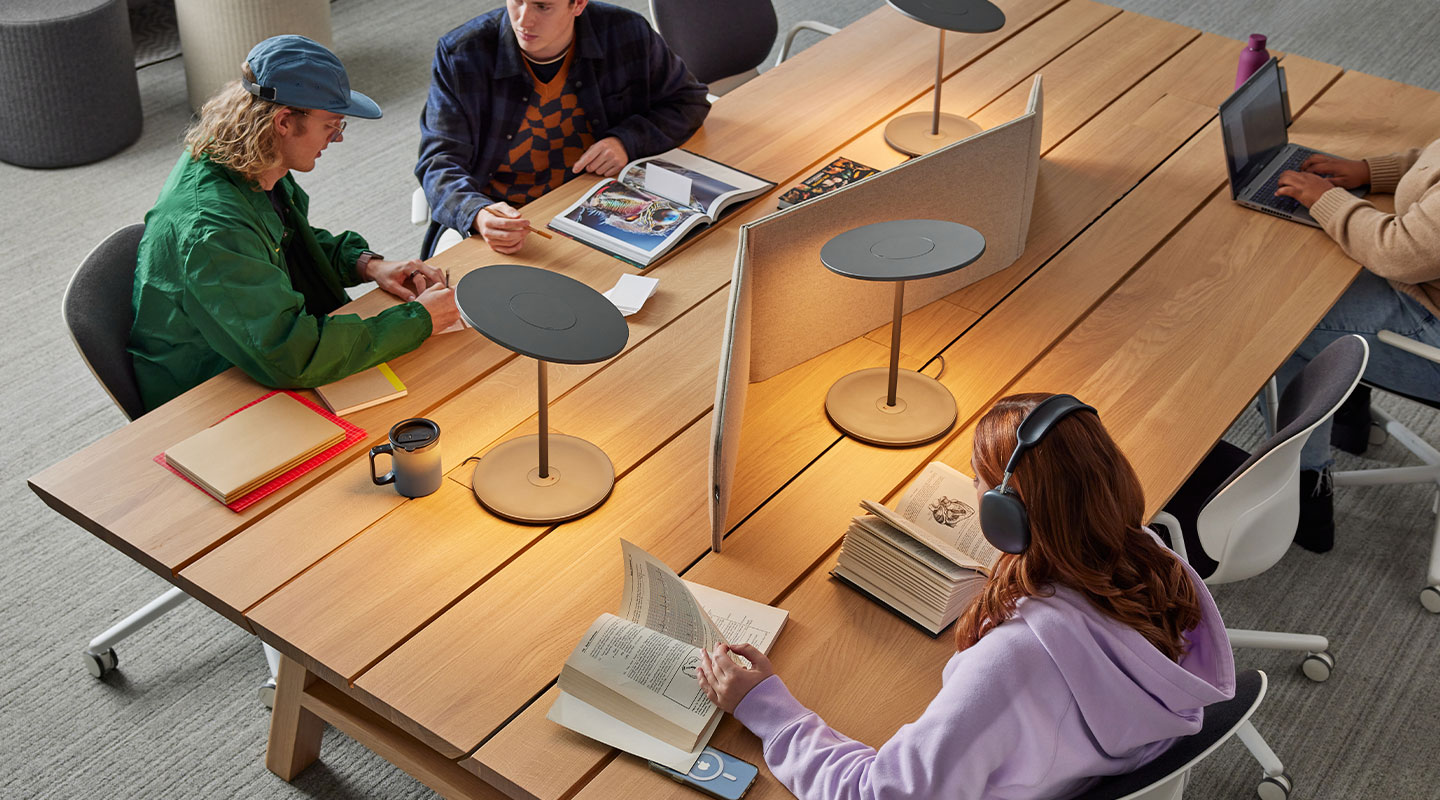
Another way to increase autonomy is to provide people with portable screens. In a busy workplace with lots of hustle and bustle, portable privacy screens enable people to turn almost any setting into a distraction-free zone. 

‘You can use the screen to create your own privacy for a moment,’ Victor says.

This is especially helpful in an open, shared collaborated space, where you may only work for a couple of hours in any given setting. And if you add colour options, people will be able to select according to their stimulation preferences – from neutral to vibrant. ‘You can pick your own colour,’ Victor says. ‘It could be yellow!’ 


Small portable screens let people create their own private bubble. 

Wayfinding using memorable colours or images

Navigating expansive spaces can be confusing and even overwhelming, but thoughtful wayfinding elements will make it easier for people to find their way. Wayfinding elements might include signage, colour schemes, iconic products, recognisable paintings, floor and wall markings, or varied materials and lighting.

Wayfinding elements help people create their own interpretations of the environment – and furniture can play a starring role. ‘Products can be a key to orient yourself in the space,’ Victor says. ‘By playing with different products and finishes or using iconic design furniture – in the end, an icon is an image! – is a way to use product as an image.’

Iconic product ‘images’ or landmarks become instantly recognisable meeting places. They can even become a shared language, Victor says. ‘“Let’s meet at the blue bar,” someone might say – and boom, you don’t even have to start thinking about it or where it is because you already know, you’ve already been.’  


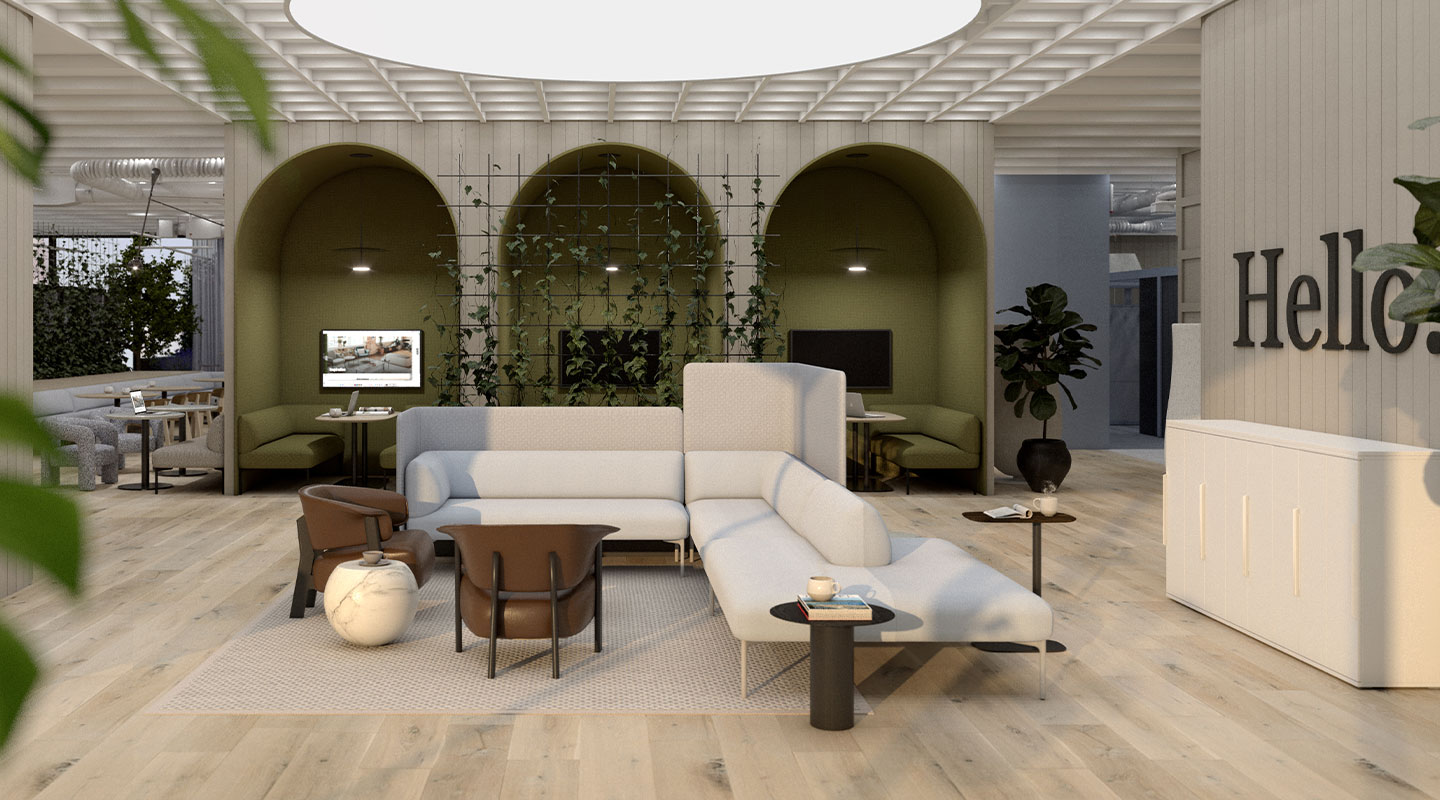
Distinct architectural features, unique settings, and memorable colour schemes can help people navigate the office. 

With thoughtful planning, stress and anxiety can be mitigated in the workplace. This is especially important for neurodivergent people, who are particularly impacted by the sensory elements of the environment. 

A variety of colour schemes, flexible furniture, portable privacy, adjustable lighting, and wayfinding elements will empower people to choose the setting that is best for them. And when people have the agency to choose and personalise settings they know will bring out their best work, you’ll have a space that feels right – for everybody. 

We’ll continue to explore neurodiversity in the workplace in future articles – be sure to subscribe so you don’t miss a thing! 

Tags:

You May Also Like