04/11/2025 • 6 min read
Reimagining work in the Middle East and beyond
7 insights from the 2025 Workplaced Report
Summary
As hybrid work patterns stabilise, organisations all over the world are reimagining workplaces. While every region is unique, challenges – and inspirations – often echo. By considering what’s working well and what people are looking for in one region, organisations can adapt and hone their local approaches.
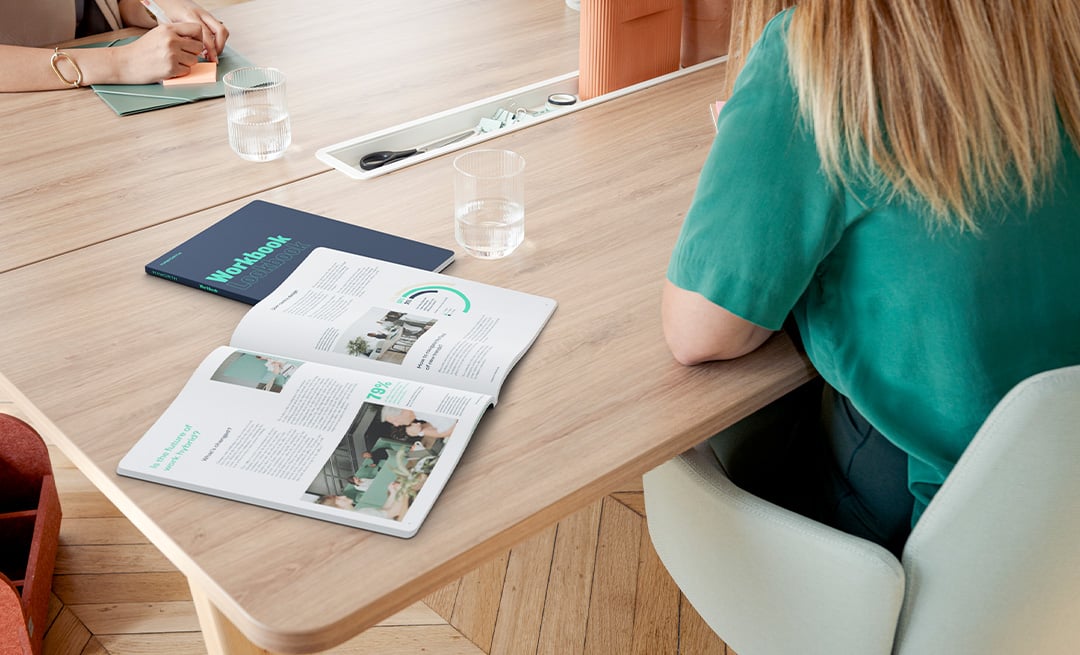
In the Middle East, there are few organisations better acquainted with the industry than Workplaced. Their recent report, Office Environments and Productivity in the Middle East, looks at the state of workplaces in the wake of the hybrid work shift. (Haworth was a Platinum Sponsor for the project.)
Here are 7 compelling insights from the report.
Hybrid work has led to increased productivity
When people have greater say in how and where they work, they tend to be more productive. Workplaced’s report provides a compelling correlation between hybrid work policies and productivity. As the Middle East embraced hybrid work in recent years, productivity jumped 16%. (The report measured perceived productivity, which rose from 52% in 2015 to 68% in 2025.)
Workplaced attributes this bounce to several factors. First, collaborative tools and AI have allowed employees to focus on higher-value work. Second, physical workplaces have been optimised for adaptability. Finally, flexible scheduling has allowed employees to match their peak productivity hours with their highest-priority tasks.
Joy to the world – or at least to the hybrid workplace
Along with the rise in productivity, Workplaced found that the rise of hybrid work policies coincided with an increase in positive sentiments. Regional support for flexible policies and other initiatives have led to improved work-life balance and workplace engagement.
Workplaced found that across the region, joy jumped 22% (from 48% in 2015 to 70% in 2025). Feeling ‘proud’ has risen 14% while feeling ‘involved’ has risen 15%. Flexibility feels good, it seems!
This rise in positive sentiment coincides with the region’s embrace of hybrid work policies. The report notes that these results align with other global studies that found a correlation between hybrid working and improved sentiments and well-being.
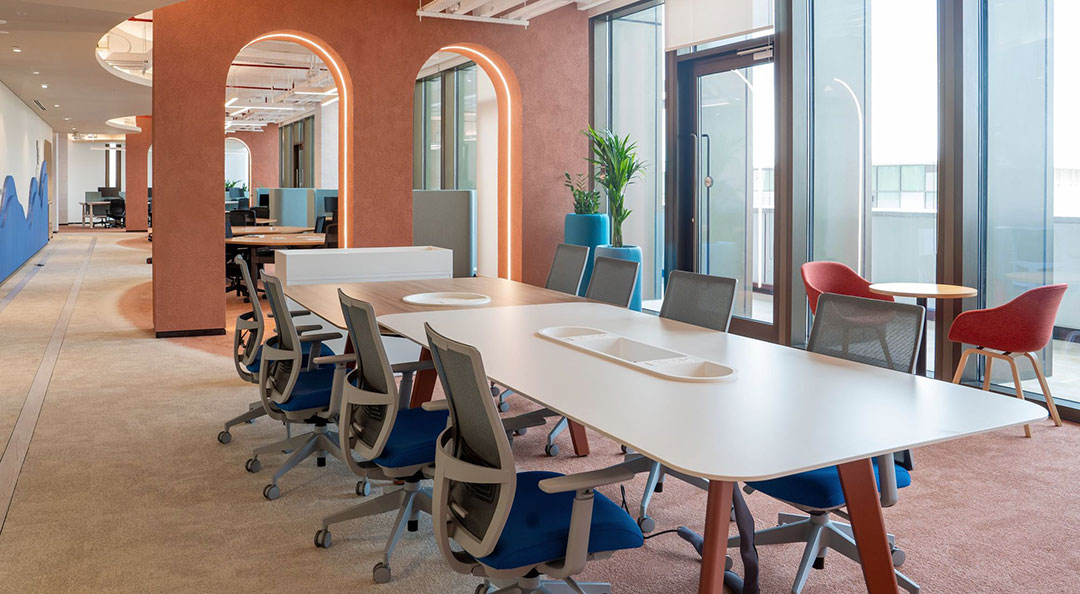
An activity-based office from a Haworth client in Qatar
Personalisable workspaces are prized, especially among younger generations
Offices in the past focused on the space itself. Now, offices focus on experiences. Workplaced reports that many organisations prioritise a variety of personalisable settings so that people can choose the best settings for their tasks. The emphasis on choice and personalisation appears to be working: the report suggests that the transformation of physical workplaces has contributed to the increases in productivity and positive sentiments mentioned above.
Gen Z particularly prizes personalisable spaces. To attract talent, Workplaced advises organisations to move toward adaptive space design, emotional engagement, and hybrid flexibility. Organisations that fail to adapt to changing employee expectations risk significant talent loss.
People want biophilia and connections to nature in the workplace
Workplaced found an entirely new priority has emerged over the past ten years: biophilia in the workplace. This demand skyrocketed from virtually nothing in 2015 to a priority for most respondents in 2025. Everybody’s into plants now!
This shift toward nature is a fundamental reimagining of what a productive workspace looks like. Unfortunately, as the desire for biophilia has increased, workspaces have not quite kept up: most people are not satisfied with the natural elements in their current workspaces. This gap represents a compelling opportunity: offices that intentionally incorporate biophilia will attract top talent – especially from younger generations. The desire for biophilia and connection with nature was particularly strong among Gen Z workers.

Haworth’s Dubai showroom emphasises natural light and biophilia
A crisis of trust
Trust plays a major role in productivity, engagement, and joy. Workplaced found that in the Middle East, a staggering 92% of respondents said that trust is their top emotional need in the workplace – but 48% of people do not feel trusted by their organisations. This trust gap is a foundational crack in the workplace. Even as organisations improve the environment, a lack of trust could undermine productivity and happiness gains.
The report notes that the trust gap manifests differently across demographics. For example, while leadership showed high levels of involvement (94%), joy was very low (36%). Without support, greater responsibility may lead to emotional exhaustion, which could in turn exacerbate the trust gap. As organisations around the globe navigate their hybrid work policies, trust will need to be intentionally addressed.
Ergonomics emerge as the top workplace priority
The ouch factor[1] isn’t going away anytime soon. Workplaced found that for most respondents (84% of women and 70% of men), furniture quality and ergonomics are the top workplace priority.
The report notes that ergonomics has rapidly become more of a priority over the past decade. This shift coincides with the rise in activity-based working; people now move more frequently between various settings throughout the day, and this constant shuffling may be causing them to seek rapid adjustability and intuitive personalisation.
The report found that many respondents were dissatisfied with the ergonomics of their current workplace furniture. Crafting furniture settings with ergonomics in mind represents an opportunity to attract top talent.
 Pernod Ricard Dubai emphasised ergonomic furniture
Acoustics are (still) a problem
You’ve probably heard by now: noise is a major issue in the workplace. The report notes that ‘the most significant misalignment issue in 2025 is noise and distractions. This has been a consistent challenge in offices for over 30 years.’
While Workplaced focused on the Middle East and Africa, the issue of acoustics is global – these findings are corroborated by data from Leesman[2] and Haworth’s own research[3]. While almost everyone seems to agree on the benefits of adaptable furniture settings and activity-based working, it appears that most organisations are failing to create the acoustic diversity necessary for activity-based work models to succeed.

The Workplaced report found that hybrid work policies have increased productivity and happiness. Organisations seeking top talent will do well to address acoustics, emphasise ergonomics, and add biophilia. Younger generations in particular are looking for personalisable workspaces.
And the trust gap is significant. To gain the productivity benefits of hybrid work, organisations will need to nurture trust across all levels.
These 7 insights are just a small preview of what you’ll find in Office Environments and Productivity in the Middle East. For more information, reach out to your local Haworth Ideation member.