Trend #3 - A.I.

Milan Design Week 2025

A prominent Asian sauce placed adverts all over Milan with a simple message:

Not created with the help of AI*.

To be fair, they were being clever – the asterisk revealed that ‘AI’ meant ‘artificial ingredients.’ But the adverts called attention to a conversation that seems ever-present.

What is the role of AI tools in the future of interior design and architecture? Given the broad range of responses – from caution and concern to enthusiasm and embrace – we were curious to discover what the creative minds of Milan had to say about the future of AI.

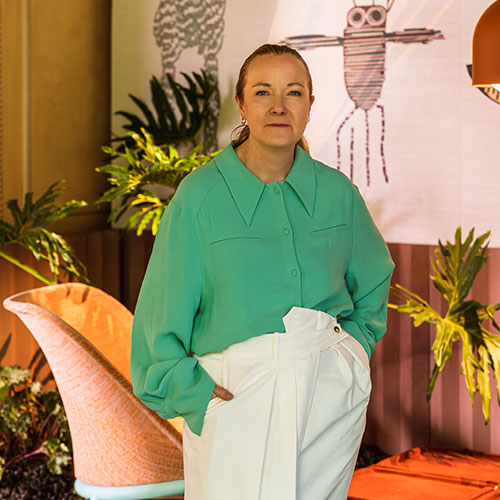
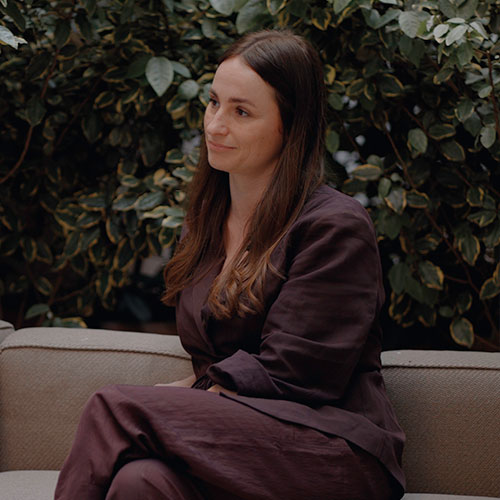
Larissa Sarjeant, Haworth’s Managing Director of Germany, discussed AI tools with Peter Schäfer, a Design Director and Senior Associate from Gensler. We asked Jane Boddy, a colour trend forecaster with the Pantone Colour Institute, about the influence of AI tools on colour. Brian Kelly, head of Haworth’s A&D division for Europe, the Middle East, and Africa, spoke to us about the impact of AI on designers. And acclaimed Berlin-based designer Hanne Willman shared her thoughts on the benefits and the limits of AI tools.

For our final ‘interview,’ we thought, Why not ask AI itself what the future holds? Claude was all too happy to oblige.
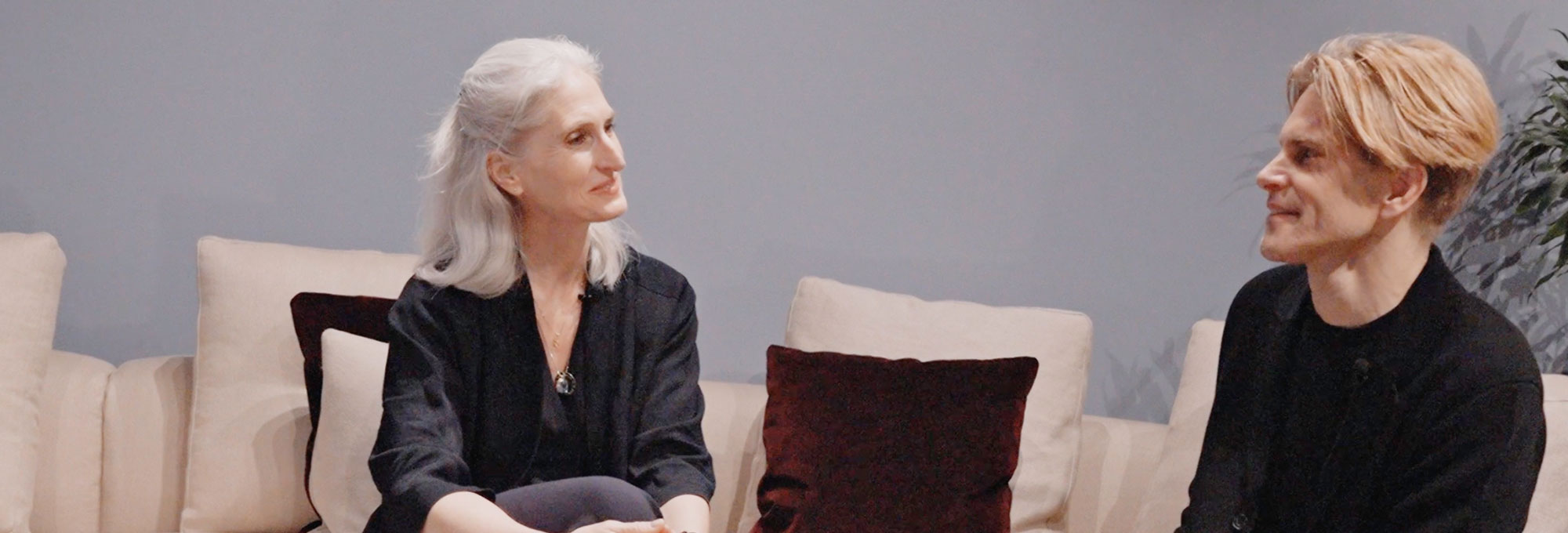

The lovely Cassina showroom hosted a conversation about AI between Haworth’s Larissa Sarjeant and Peter Schäfer, a Design Director and Senior Associate with Gensler in Munich.

‘We’re using AI mostly in the early stages of the design process,’ Peter said. ‘Often, we have new projects in new cities, new locations, which we don’t know much about. And [AI] is really helpful to understand the location, to learn a little about the history, about the building, about the street… Maybe we wouldn’t have known that there’s a strong history about weavers in this street, and suddenly you want to take that story and make it part of the building, make it part of what you develop.’

We were curious about the effect of AI on craft. Larissa noted that, from a product perspective, there are some crafts that AI probably won’t affect. ‘When I think of real craftsmen that are chiselling down the stone or that are working on wood with their hands, I think in some ways that cannot be improved by AI,’ she said.

We asked if there may be an increased appreciation for the handmade as the use of AI tools increases. ‘Absolutely, I think that will happen,’ Peter said. ‘We’re already seeing that people are reaching more to natural products, made elements, for sure.’

Larissa and Peter discussed much more – including whether AI tools will reduce human presence in design, how AI might democratise design, the complex question of AI’s sustainability, and the need to push tech giants for data transparency. You’ll find it all in our upcoming Trend Report.


As Haworth’s new leader for the A&D division in Europe, the Middle East, and Africa, Brian Kelly is frequently asked about the role of AI in design. ‘I absolutely feel there will be benefits,’ Brian said. ‘Processes will speed up. The design community can use the AI tools that are available to them to work faster.’

At the same time, Brian is confident that there are human aspects AI won’t be able to replicate. ‘For me, I don’t think you can ever replace the role of the designer when it comes to the emotion that a user has when they either walk into a space or they’re interacting with a product,’ Brian said. ‘Designers will always be required.’


When we spoke with Jane Boddy of the Pantone Colour Institute about Dualities on our first day, we also asked her how AI might influence colour. ‘[AI] is a great creative partner to human imagination,’ Jane said. ‘And it’s really a lot of fun. And what I particularly love about it is actually the level of colour which is coming through. There’s a lot of this sporty, dynamic, crisp colour coming through in AI.

‘I was once talking to one of the AI models I was using about sour neons or sour tones, and the colours that came out were beautiful,’ Jane said. ‘For sure, AI is something we’re looking at to find inspiration from in colour. A lot of the clean levels that we’re seeing in AI actually reflect through into real products… I can really visualise some of my ideas through AI.’


When we spoke with Hanne Willman, an exciting young designer based in Berlin, the idea of AI as a visualisation assistant returned.

‘[AI] is a very good tool to test if things make sense. I mean, I can tell AI to test this so far with 10 different frames or 10 different diameters or something, right?’ Hanne said. ‘It’s really wonderful to make good sceneries and renderings and stuff like this.’

While that iterative function is very useful, AI can only go so far in terms of true design. ‘What AI is doing is taking things that are already out there and mixing them all up in a new way and giving it back to you,’ Hanne said. ‘So AI will always just repeat what’s already out there – like a throw of the dice.

‘AI will obviously never replace actual design work, because design work is on a deeper level – finding something new that has not been there yet.’

(Look out for more from Hanne tomorrow in our post about Nostalgia!)

As we were exploring the role of AI in the future of interior design, we thought, Who better to ask than AI itself? So we checked in with Claude – and this is how they responded.

‘AI will transform interior design and architecture as a creative partner, not a replacement,’ Claude said. ‘Key applications include generative design for rapid layouts, realistic visualisation tools with AR/VR capabilities, intelligent material recommendation systems, and advanced performance simulation.

‘The greatest potential lies in AI handling routine tasks while designers focus on emotional and contextual elements. The challenge will be maintaining human touch in AI-assisted spaces.'

‘Successful designers will develop a symbiotic relationship with AI – expanding possibilities while applying human judgment to final decisions, creating spaces that combine technological innovation with human sensibility.’


Listen to article

Note, if the audio player does not show, you may need to accept preferences cookies to enable the player.


After exploring the role of AI in design with creative minds in Milan, we found a consensus: Peter, Larissa, Brian, Jane, Hanne, and even AI tool Claude agreed that AI tools are a partner to human designers with many advantages and acknowledged limitations. Some aspects of the design experience will always rest in human minds and human hands. For other areas – especially in the conceptualisation and story-forming stage – AI tools are poised to save time and hone ideas. The promise is there.

At the same time, Peter and Larissa in particular noted that legitimate concerns remain around data transparency and sustainability, and designers around the world should be ready to hold tech giants to account. There is real-world work to be done.

And so went our exploration of AI – another concept fraught with contrasts.

Our time in Milan is unfortunately drawing to a close – we only have one more day of trends to report on! Check back in tomorrow when we cover Nostalgia.