03/06/2025 • 3 min read

Memory is the key, emotion is the door 

thoughts on design with Nendo founder, Oki Sato

by Alex Przybyla

From Pokémon collaborations to the Japan Pavilion for Expo 2025, Tokyo-based design firm Nendo is equally at home in the playful and the profound. Founded in 2002 by Oki Sato, Nendo is known around the world for thoughtful design that balances whimsy, lightness, and intuitive functionality. 

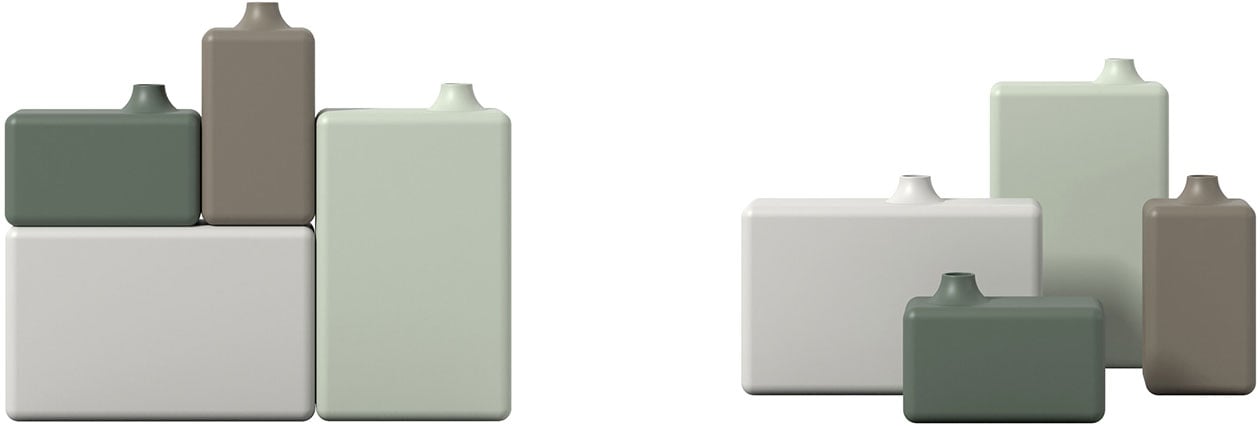
That design philosophy is wonderfully expressed in Nendo’s work for Cappellini. The Peg Chair was inspired by the cute cars that ‘casually scoot around the streets of Milan’. The Thin Black Table epitomises Nendo’s playful minimalism. And the TassTumu vases bring sophistication to modularity.

‘Nendo’ means clay or play-doh in Japanese – and the name is apt. Flexible, adaptable, ever free to transform, Nendo represents a design philosophy that is neither rigid nor self-immersed. Nendo looks outward, inward, and in-between, ever aware of the fluid connections between all living things. The resulting design often invites viewers to reflect – and almost always makes us smile. 

We were beyond thrilled when Oki Sato took the time to write us his thoughts on Design & Memory during Milan Design Week. 
What role does memory and nostalgia play in Nendo designs? 

‘Memory plays a very important role. Rather than focusing on highly specific memories, I find that broadly shared ones – experiences many people have in common – are preferable. 

‘By incorporating these kinds of memories into a design, it becomes possible to create something that resonates with users and stirs their emotions. You might think of memory as the “key” and emotion as the “door.” Using the right key allows you to open the door.’

For you, how are materials and emotions connected? 

‘I feel that there are three key elements connected to emotion: color, material, and form. I aim to create designs that move people emotionally by carefully balancing and prioritizing these three components.’

Do you begin with an emotional impact in mind and find material that will match it, or do you begin with the material, and let the emotional impact remain open to interpretation? 

‘Definitely the former. I begin by conceiving a story that generates emotional value, and then I consider the most suitable colors, materials, forms, and techniques to suit it. It’s like fitting puzzle pieces together – a very logical process.’


TassTumu, Nendo’s new stacking vase collection for Cappellini. 

How can memory of the past – in both materials and craft techniques – enhance the materials and craft techniques of the future? 

‘I believe that utilizing cutting-edge technology is essential for evolving materials and techniques from the past and carrying them forward into the future. At the same time, such collaborations can also help advanced technologies become more seamlessly integrated into everyday life.’

In terms of materials, what is Nendo super excited to work with these days? Are there any new materials you hope to work with in the near future? 

‘Although we don’t have any final output yet, I’m currently exploring whether the expressions and values of natural materials like wood and stone can be translated onto industrial materials such as metal and resin. I’ve been conducting experiments along these lines daily for the past few years. I hope you’ll look forward to seeing what comes out of it.’

Missed Milan?

Download our Milan 2025 Trend Report to read up on design trends, interviews with creative minds, and the inside stories behind Milan’s coolest exhibitions.

Tags:

You May Also Like