10/13/2026 • 3 min read
5 Trends Changing the Higher Education Experience
How today’s campuses support connection, learning, and adaptability
Higher education and the campus experience continue to evolve, as instructional design, technology, and workforce demands change rapidly. Institutions face growing pressure to meet new student expectations and preserve the relevance of earning a degree, while responding to advances in AI, shifting demographics, and a greater focus on sustainability and well-being.
Campus environments need to offer more than places to attend class. In addition to learning, they must foster connection, participation, creativity, and the flexibility to adapt.
Here are 5 trends influencing the future of higher education environments:
1. Interstitial Space as Learning Hubs
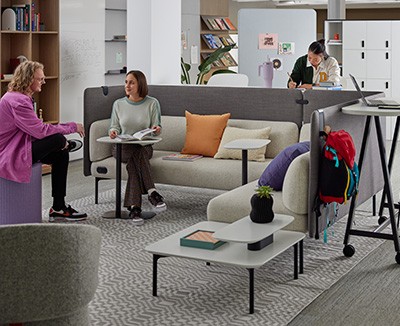
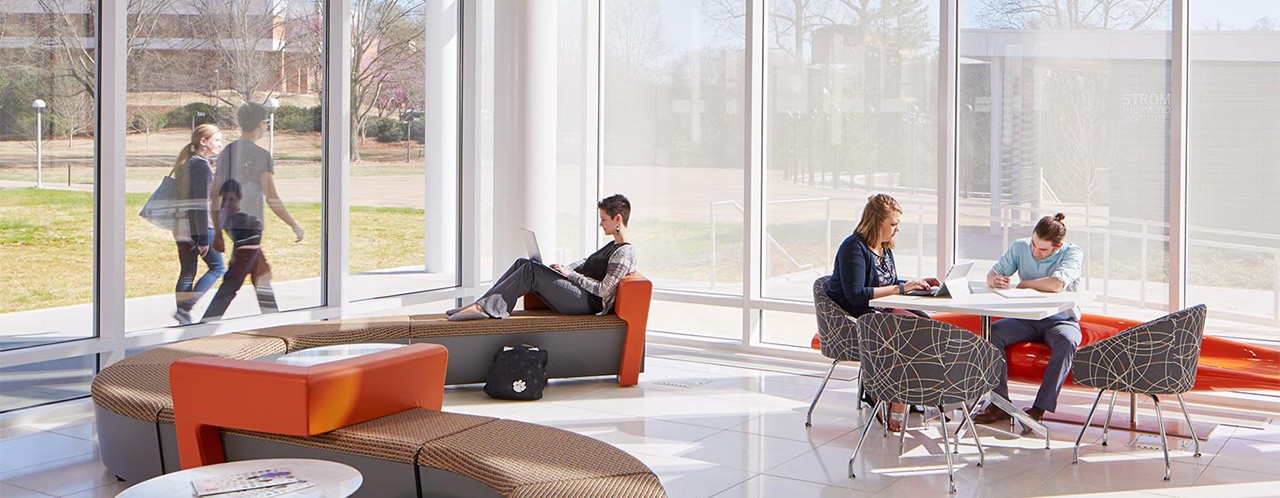
The classroom is no longer the sole center of learning. Students move fluidly between classes, study sessions, social interactions, and project work throughout the day, creating opportunities for learning almost everywhere on campus. Corridors, atriums, cafés, outdoor areas, and other ancillary spaces can become active settings for study, collaboration, and informal exchange. When furnished with the perfect blend of comfortable seating, access to power, technology, and varying levels of privacy, these often overlooked areas extend learning across campus.
Activating interstitial space helps institutions make better use of existing real estate. Movable glass walls, pergolas, acoustic pods, and booths can support student projects and provide varying levels of privacy, while views into labs and classrooms put learning on display. Locating coffee shops, gathering areas, and outdoor access near academic spaces encourages people to linger and creates more opportunities for spontaneous interaction.
2. Community Spaces Combat Loneliness
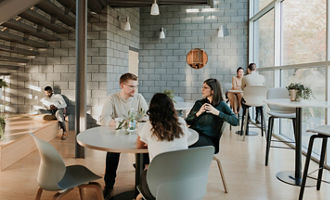
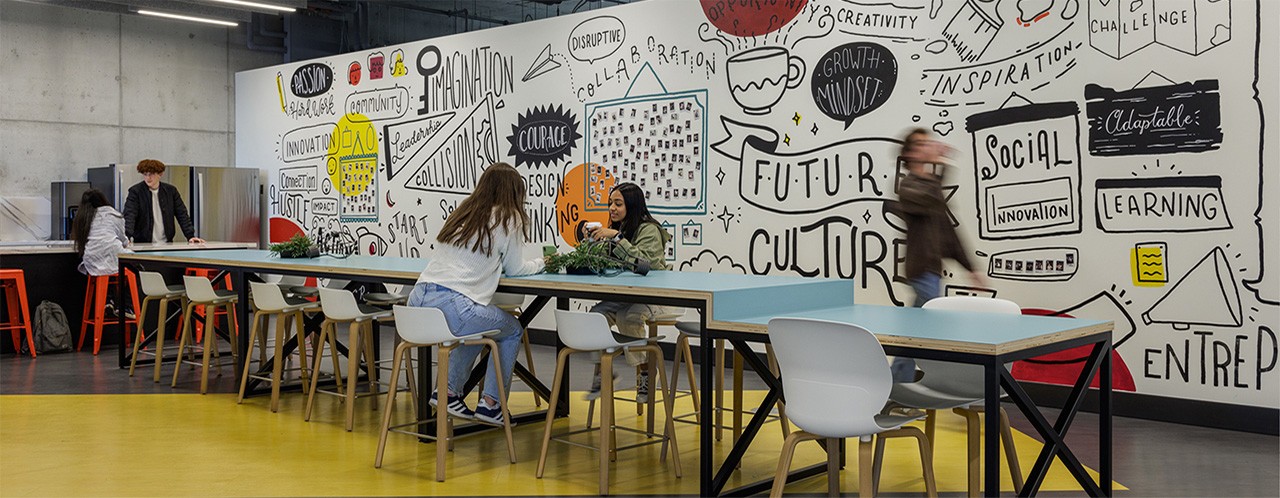
As students seek meaningful connection, campus design can play an important role in creating a sense of belonging. Visibly open, and welcoming social settings increase opportunities for students to share experiences and engage with one another. These moments can help the campus feel more personal and supportive.
Designing with community as a guiding principle means providing a range of places to connect. Smaller residential neighborhoods can make student living feel more approachable, while layered ancillary settings support individuals and groups within larger spaces. Natural light, exterior views, biophilic elements, and warm materials can soften institutional environments and encourage people to stay.
3. The Phygital Studio
The boundary between in-person and virtual learning continues to blur. Online, hybrid, and HyFlex instructional models give students more choice, while immersive technology creates new opportunities for hands-on learning. This results in the need for spaces that merge physical and digital experiences together in one adaptable phygital environment.
Clearly, today’s learning environments exist beyond traditional classrooms and static lecture halls. They can function as broadcast studios, collaborative laboratories, and content-creation environments that support students attending in the room or from a distance. Thoughtful lighting, acoustics, camera placement, beamforming audio, flexible furniture, and access to power can help remote and in-person participants contribute more equitably.
The space should follow the intended learning experience. Starting with instructional goals allows institutions to determine which tools, settings, and levels of flexibility will best support participation, critical thinking, problem-solving, and workforce readiness.
4. Faculty Spaces Optimize Performance
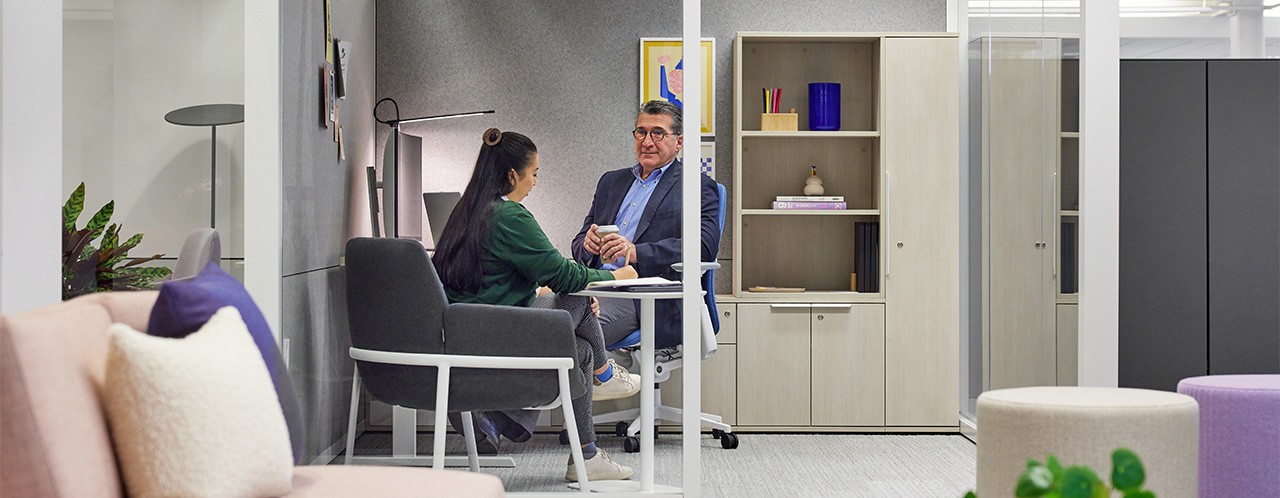
Faculty roles have expanded beyond teaching and research to include mentorship, collaboration, digital content creation, and community engagement. Yet traditional faculty environments often rely on private offices that may sit unused for much of the day. Flexible faculty hubs can better align space with how educators work now, while maximizing overall space performance.
A mix of settings gives faculty the autonomy to choose environments for concentration, conversation, creation, reflection, and social connection. Shared work areas can make mentorship more visible and accessible, while enclosed rooms support private conversations and focused work. Adequate lockable storage and department-specific resources are essential to making shared environments work.
Successful change requires a thoughtful process. Institutions can begin with a space audit, gathering input from faculty, adjuncts, and graduate students to determine the needs of each group. Then, new approaches can be tested before broader implementation.
5. Creating Multifunctional Spaces
The most valuable campus spaces are active throughout the day. Rather than dedicating each room to one purpose, institutions are designing multipurpose environments that can shift among lectures, collaborative projects, labs, events, and community programs. This approach helps campuses respond to changing needs while maximizing the use of every square foot.
Multifunctional spaces depend on a flexible infrastructure. Agile furniture allows people to reconfigure a room quickly. Acoustic curtains or operable walls help manage sound and divide larger settings. Adaptable lighting supports different activities, while integrated storage keeps equipment accessible but out of the way. Distributed power and data, including raised floors or overhead service carriers where appropriate, allow activities to move beyond the perimeter.
Like the classic theater that can serve many needs—concerts, plays, speakers—multifunctional campus spaces become high-performance settings that can adapt to suit any scheduled event. This flexibility helps institutions reduce dependence on specialized spaces that may become outdated or remain empty for long periods.
Adaptable Solutions for the Future
Higher education leadership continues to recognize that learning can happen anywhere. The most successful campuses are creating connected, adaptable ecosystems that support learning, work, and belonging across the entire student experience. By activating overlooked space, prioritizing belonging, integrating physical and digital experiences, supporting modern faculty work, and programming spaces for multiple uses, institutions can create campuses that deliver lasting value.
As higher education continues to change, choice and connection will become even more important. The environments that support them can help campuses remain relevant, resilient, and distinctly human.
Explore the Future of Higher Education
Discover insights and design ideas for creating adaptable higher education environments that support learning, connection, and campus life.