Concerns over noise in the workplace are nothing new. Chatty coworkers, clanging equipment, and beeping electronics have long disrupted focus. But in recent years, acoustical problems have become especially pronounced. Our global Evolving Workplace Study revealed that noise is the number-one challenge facing organizations.
This issue is amplified by several macro-level shifts. Hybrid work policies are stabilizing, bringing more people into the office more often. At the same time, real estate footprints are shrinking, and worker density is increasing. Together, these shifts—along with the rise of video calls and evolving work behaviors—make acoustic planning increasingly challenging.
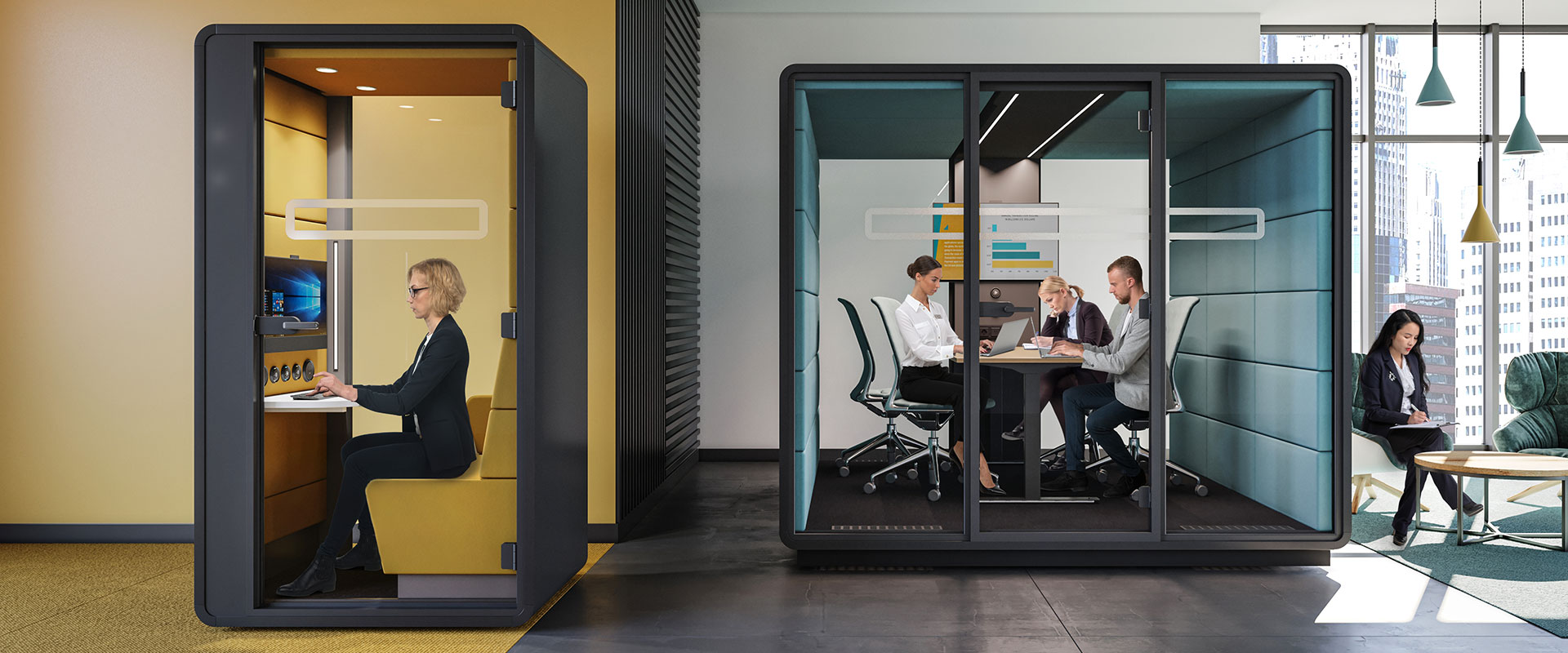
While the primary purpose of the office is to foster collaboration and connection, employees still need access to quiet, focused spaces throughout their day. This dual need for interaction and concentration underscores the importance of designing environments that flex to support both.
Emerging Sources of Workplace Noise
Several new sources of noise are disrupting the contemporary workplace.
- Adjacencies
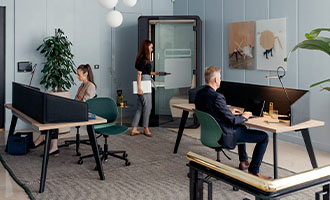
In many modern offices, spaces fall along a spectrum—from collaborative, vibrant zones to heads-down, deep focus areas, with small group interaction spaces somewhere in the middle. It is important to consider space proximity and adjacencies for acoustic balance.
Naturally, group collaboration spaces tend to be the most auditorily active, filled with the sounds of brainstorming and spontaneous discussion. Issues arise when offices place quiet and loud zones adjacently without employing acoustic design. This can unwittingly create a tension between workers who are engaged in disparate activities. Loud areas can heavily weigh on workers, leading to outcomes like stress, loss of productivity, and lack of comfort.
- Shrinking Office Footprints + More People in Office
Our study uncovered 2 additional trends that contribute to workplace noise: shrinking real estate footprints and increased worker density. As organizations reduce their square footage while bringing more people into the office, the result is a logical increase in disruptive chatter and ambient noise.
For respondents who reported both decreased real estate and increased density, acoustics emerged as a significantly greater challenge than for those who did not. This finding reinforces the idea that packing more people into smaller spaces exacerbates noise issues.
- Video Calls
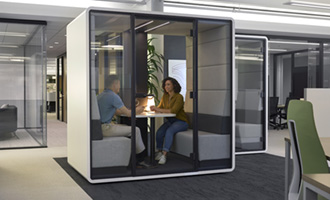
The rise of hybrid work has brought with it a surge in video calls. While this technology is invaluable for bridging gaps between remote and in-office participants, it introduces a new format for noisy conversations and acoustic complexity.
The goal isn’t to eliminate noise entirely—doing so could result in a lifeless, demotivating environment—but utilize acoustic design principles and solutions when needed.