When the borders between home, work, and hospitality blur

And why Cappellini CEO Kurt Wallner sees the blurring as a strength
The boundaries between residential, workplace, and hospitality interiors are becoming less distinct. For Cappellini CEO Kurt Wallner, the ‘contamination’ between these worlds is a fascinating design problem – and pieces that get it right will stand the test of time.
A hotel lobby has become a place to open a laptop. An office lounge can feel closer to a living room. Public spaces are expected to offer greater comfort, while the home absorbs new work activities.
The old distinctions between residential, workplace, and hospitality interiors have not disappeared, but they are becoming less useful as definitions of how a space should look, feel, or function.
Cappellini CEO Kurt Wallner describes the residential-contract blur as ‘the most interesting design problem of this decade’ – and the resulting ‘contamination’ between worlds is a strength rather than a compromise.
For Cappellini, a piece should be able to meet the demands of contract use without losing the qualities that give it character. Kurt sees ‘each product [as] a genuine declaration of intent based on bold design and “contamination“, enriching what is functional and mundane with artistic aspirations.’
Category boundaries matter less than the experience in a space
Related: Cappellini’s case for the designed office: The hand, the method, the permanence
Contract interiors come with particular demands: furniture needs to withstand intensive use, meet project requirements, and remain serviceable over time. In contrast, residential spaces can prioritise aesthetics over all else, casting a doubtful eye at functional performance.
‘The conventional industry response has been to create two parallel product families – a residential line that looks beautiful and a contract line that performs,’ Kurt says. ‘The implicit assumption is that beauty and performance are in contradiction. We reject that entirely.’
Alongside that performance, people are looking for comfort, tactility, individuality, and a sense of welcome that is no longer confined to residential interiors. People want both beauty and long-term performance, and those expectations increasingly shape workplaces, hotels, lounges, meeting areas, and other shared spaces.
That does not simply mean making an office look like a home. A workplace can borrow the intimacy of residential design, while hospitality influences how social and collaborative spaces are conceived. Blurring the boundaries seems to lead to a richer experience.
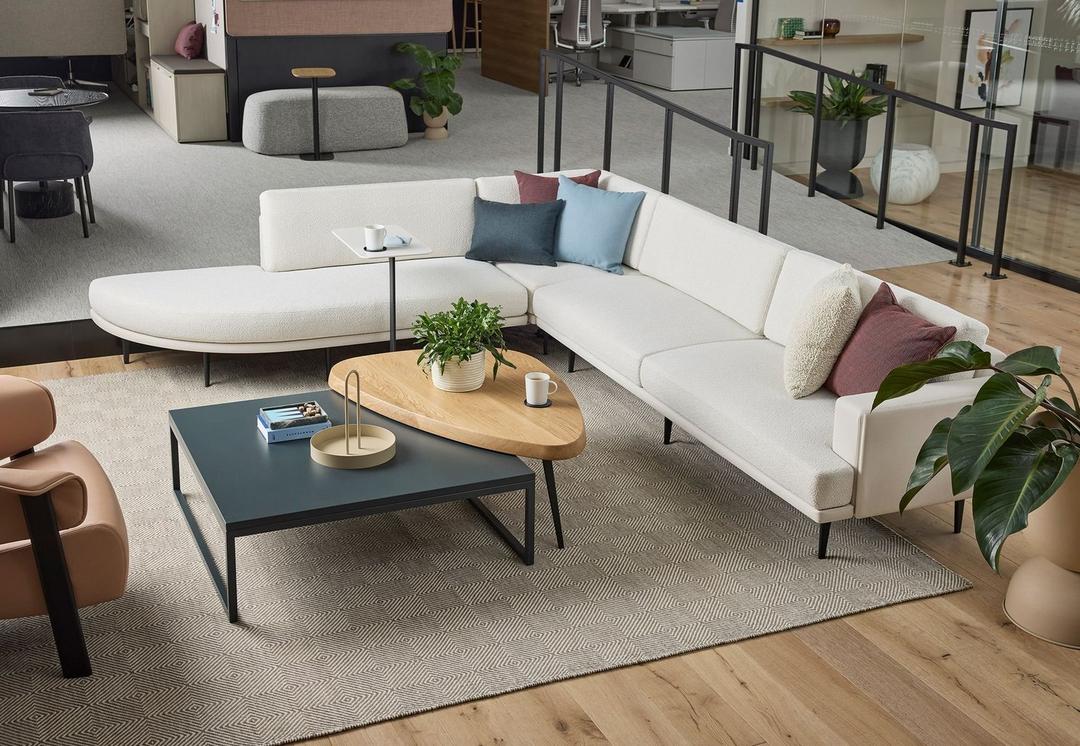
Designing across residential, workplace, and hospitality interiors
Kurt asks one critical question of Cappellini products: ‘Does this perform at contract grade, and does it still feel like Cappellini? If the answer to both is yes, it will be launched. If not, it goes back to the drawing board.’
The deliberate dissolution of borders is evident in the portfolio. Jasper Morrison’s Lotus chair pairs visual lightness with casual comfort and comes in three back heights, allowing it to work at a dining table, in a formal meeting room or at a desk. Giulio Cappellini’s Gong gives a simple side table a sculptural profile suited to formal meeting areas and informal collaboration zones. With swappable upholstery, Patricia Urquiola’s Lud’o Lounge can adapt to different settings and seasons. Reduced to the essentials, the Morrison Stool by Jasper Morrison looks equally at home in a flagship store and at a kitchen counter. The Basket Sofa by the Bouroullec brothers brings the generosity and familiarity of living room seating into shared contract settings.
What connects these objects is their ability to retain a distinct identity across different environments. Objects designed to work everywhere risk belonging nowhere: as furniture moves more freely between home, workplace, and hospitality, versatility can easily become neutrality.
Cappellini’s approach suggests that adaptability does not have to come at the expense of character. For architects and interior designers, that changes the starting point. Rather than asking whether a piece belongs to a residential or contract category, the more useful question may be what kind of experience the space needs to create.
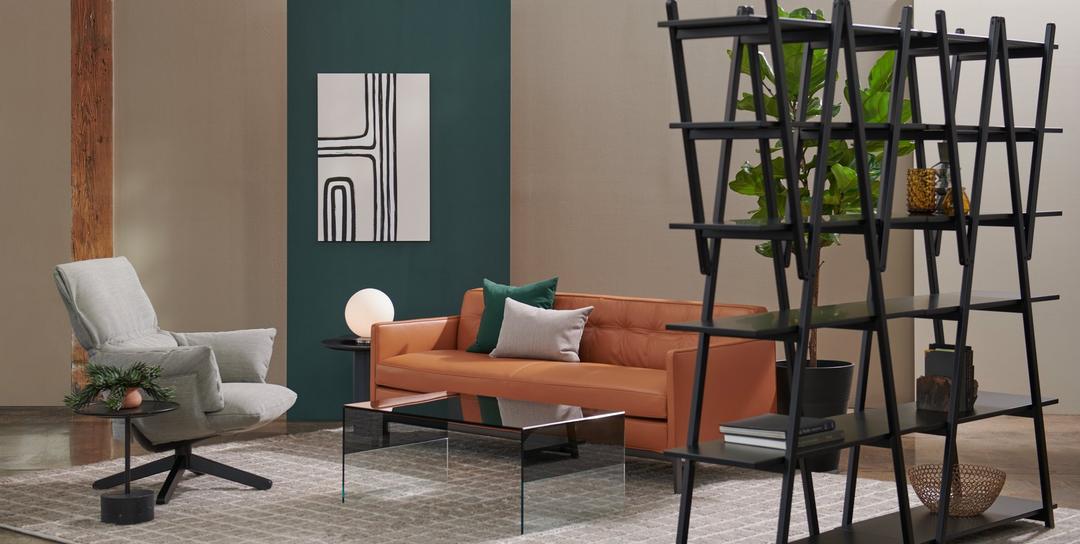
Durability is just one part of longevity
In a sense, longevity is the first sustainability metric – ahead of questions around material origin, circularity, and waste reduction. ‘A piece that lasts a lifetime produces less waste than ten pieces that don’t,’ Kurt says. He points to Lud’o, with its removable upholstery and recycled and natural-fibre padding, as an example of designing for a longer useful life.
And physical durability is only part of the longevity equation: furniture must also survive changes in taste, behaviour, and context. A piece designed for one narrowly defined setting can become obsolete while remaining perfectly functional.
As interior types overlap, permanence takes on another meaning: a design can endure by remaining relevant across different places and moments. That idea feels particularly pertinent as workplaces continue to evolve.
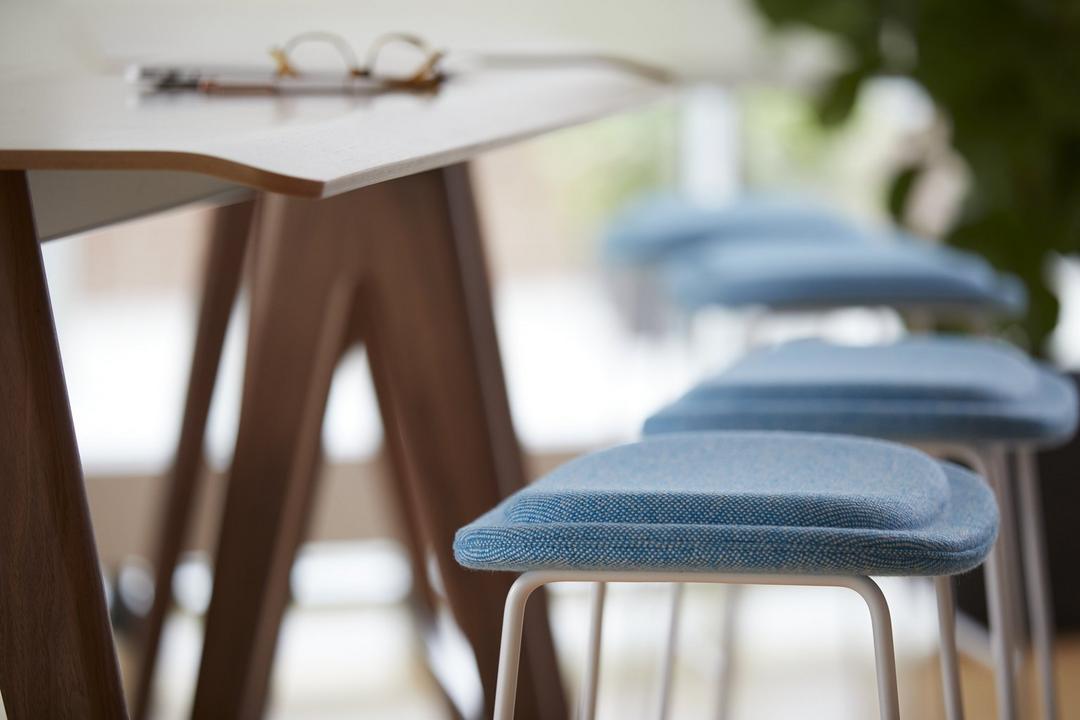
Products with presence make a place worth spending time in
Performance is relatively easy to specify. Durability can be tested. Dimensions can be measured. Materials and finishes can be documented. But presence is harder to quantify.
Kurt describes the protagonists of the Cappellini portfolio as ‘objects with authority, with singularity, with the quiet insistence that a room should feel like somewhere.’
This sense of presence often determines whether a space feels merely functional or somewhere distinct where people want to spend time. A generous sofa can change the character of a workplace lounge. An unexpected form can give identity to a meeting space. Colour, tactility, proportion, and familiarity can influence how formal, intimate, or welcoming a space feels before anyone has used it.
The borders between residential, workplace, and hospitality design are blurring, but that does not mean offices are becoming homes or hotels are becoming offices. Instead, designers are gaining a wider vocabulary to draw from and less pressure to remain within the confines of a single typology.
As those conventions loosen, the question is no longer simply where a piece belongs, but what it can bring to a place. When home, work, and hospitality begin to overlap, design becomes less about categories and more about the experiences we create within them.
Three boundary-blurring ideas to consider
Start with experience
Consider how a space should feel and be used, not only how it is defined.
Keep character and performance together
Comfort and emotional presence can coexist with the demands of contract environments.
Design for lasting relevance
Look beyond durability to furniture that can adapt, evolve, and remain desirable over time.