Alive, Not Loud.
Manage workplace acoustics so people can connect without disruption and focus on demand. Keep your office alive - not loud.
Research on Workplace Acoustics
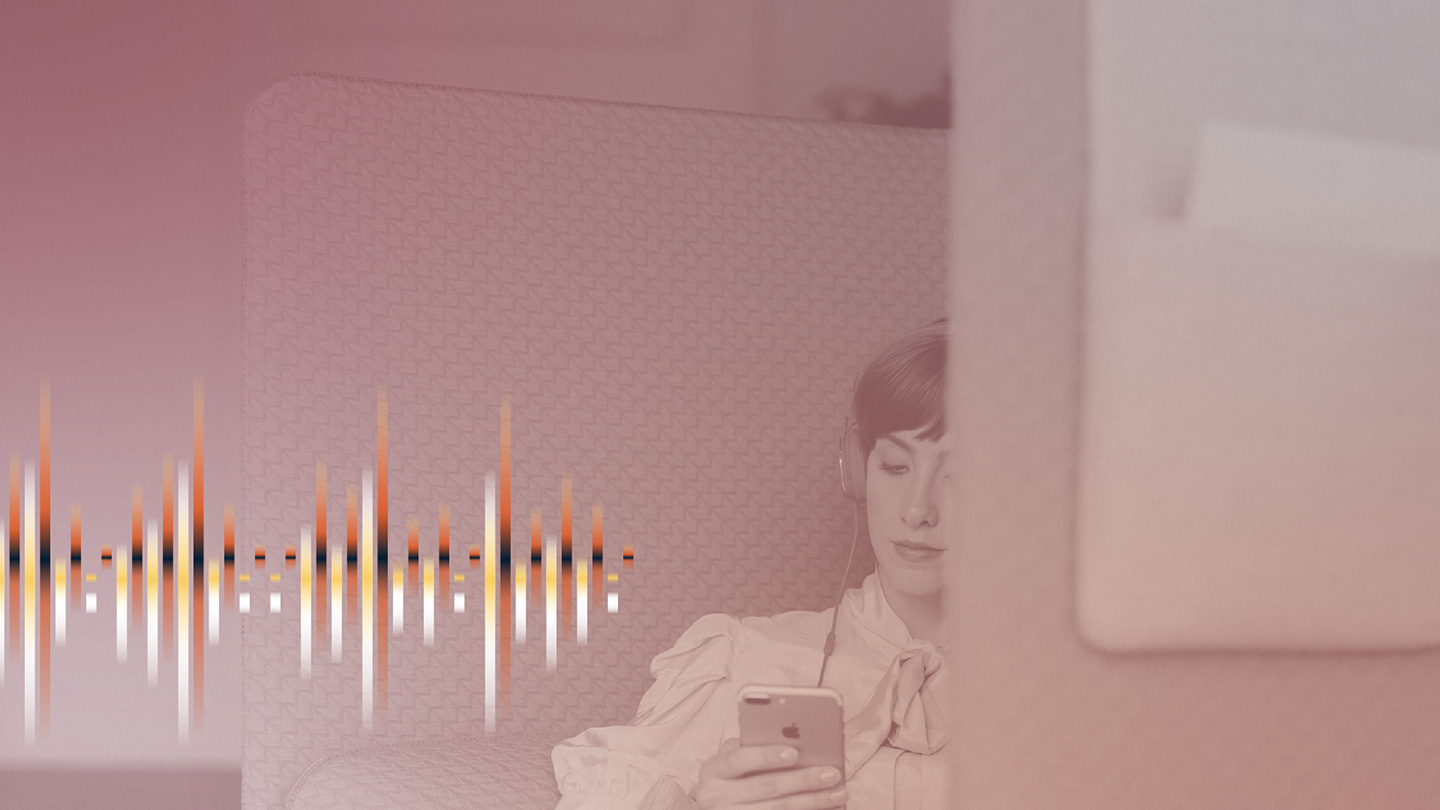
Workplace noise is a top employee complaint and a measurable drag on productivity. Unmanaged speech noise wastes attention, slows decisions, and erodes trust.
Treat sound as a design parameter: tune open areas and add precision privacy where it matters to improve call clarity, reduce complaints, and lift day‑to‑day performance.
Why Workplace Acoustics Matter
Good acoustics support productivity, collaboration, privacy, and well-being. Yet many organisations still struggle to create environments that support different workstyles and activities.
89%
of employees need quiet for focused work.
25 dB
minimum speech reduction recommended for workplace speech privacy.
34%
of employees are satisfied with workplace noise levels.
30 dB
speech reduction delivered by ISO 23351-1 Class A acoustic pods.
Acoustics Performance:
One System, Three Brands
With Haworth × Hushoffice x BuzziSpace, you get an integrated strategy for how sound behaves, and how the interior performs.

Haworth
Orchestration & consistency: layout and furniture planning so each zone fits its activity (collaborate, meet, focus) and sound stays controlled over time.
Hushoffice
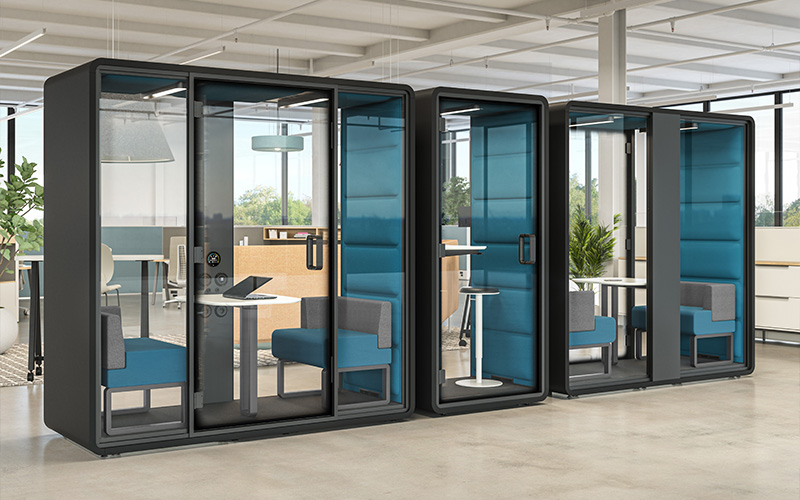
Precision privacy: ISO‑tested pods that keep voices in and noise out for clear calls and confidential conversations - room acoustics, solved where needed.
BuzziSpace
Shared soundscape: panels, ceiling elements, acoustic lighting and accessories that cut echo, improve speech intelligibility, and set the feel of open areas.
The Result → Clearer calls. Fewer complaints. Spaces that look, feel, and work better - a strategy that scales from single rooms to entire floorplates.
Acoustic Design Guide
Learn how to improve any space acoustically with helpful tips and tricks around the workplace.
How to design acoustics for high performing teams
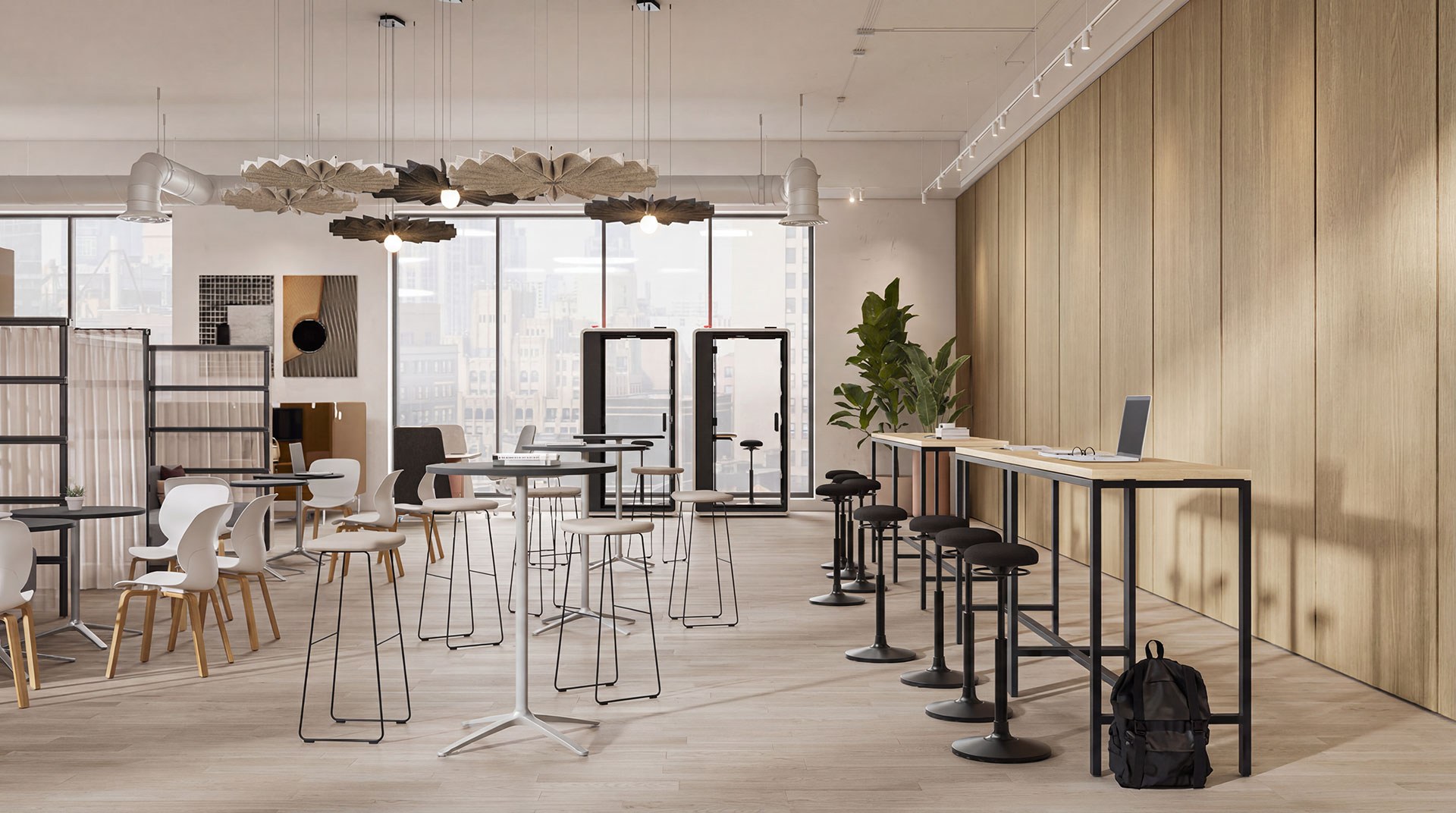
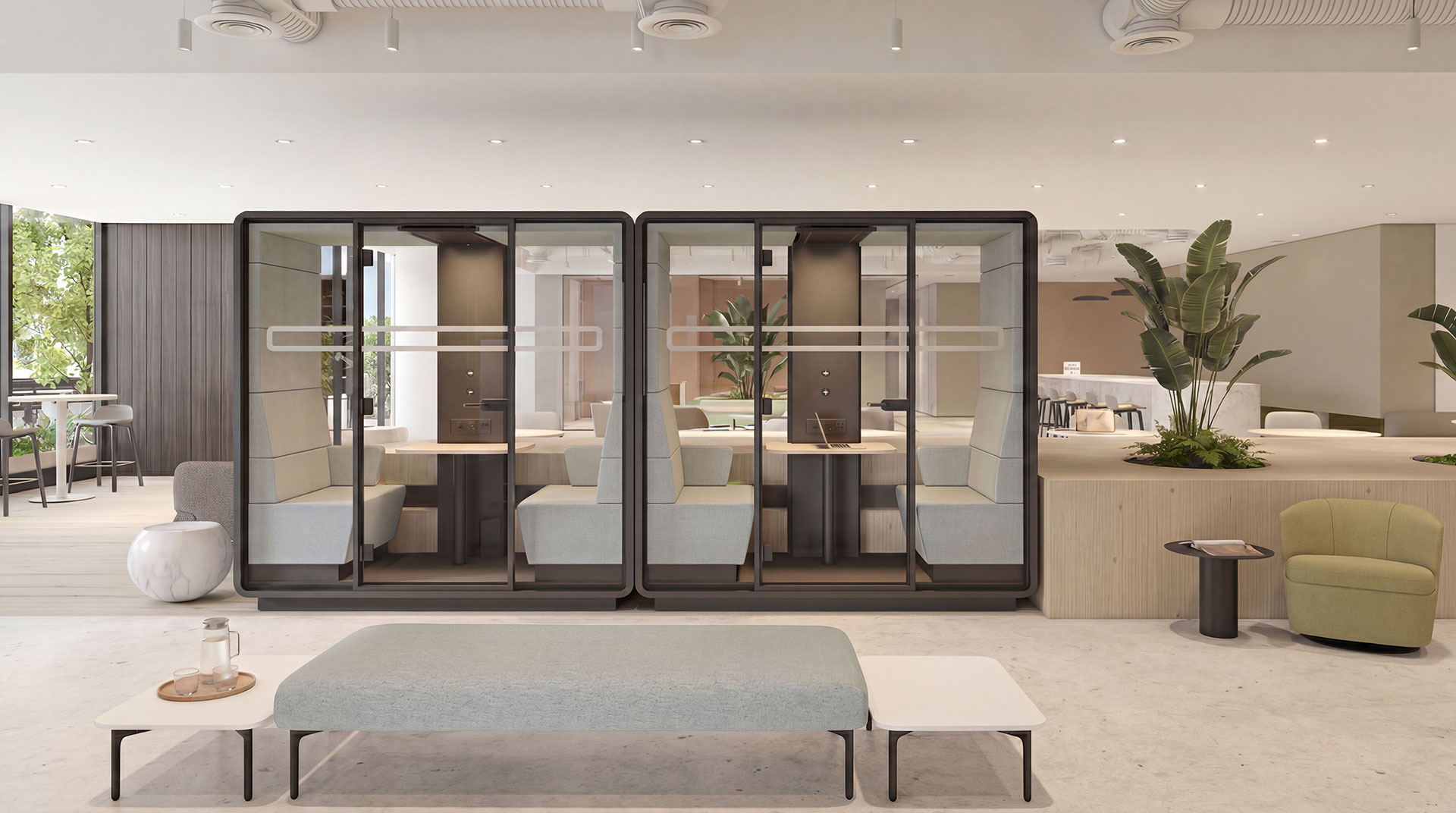
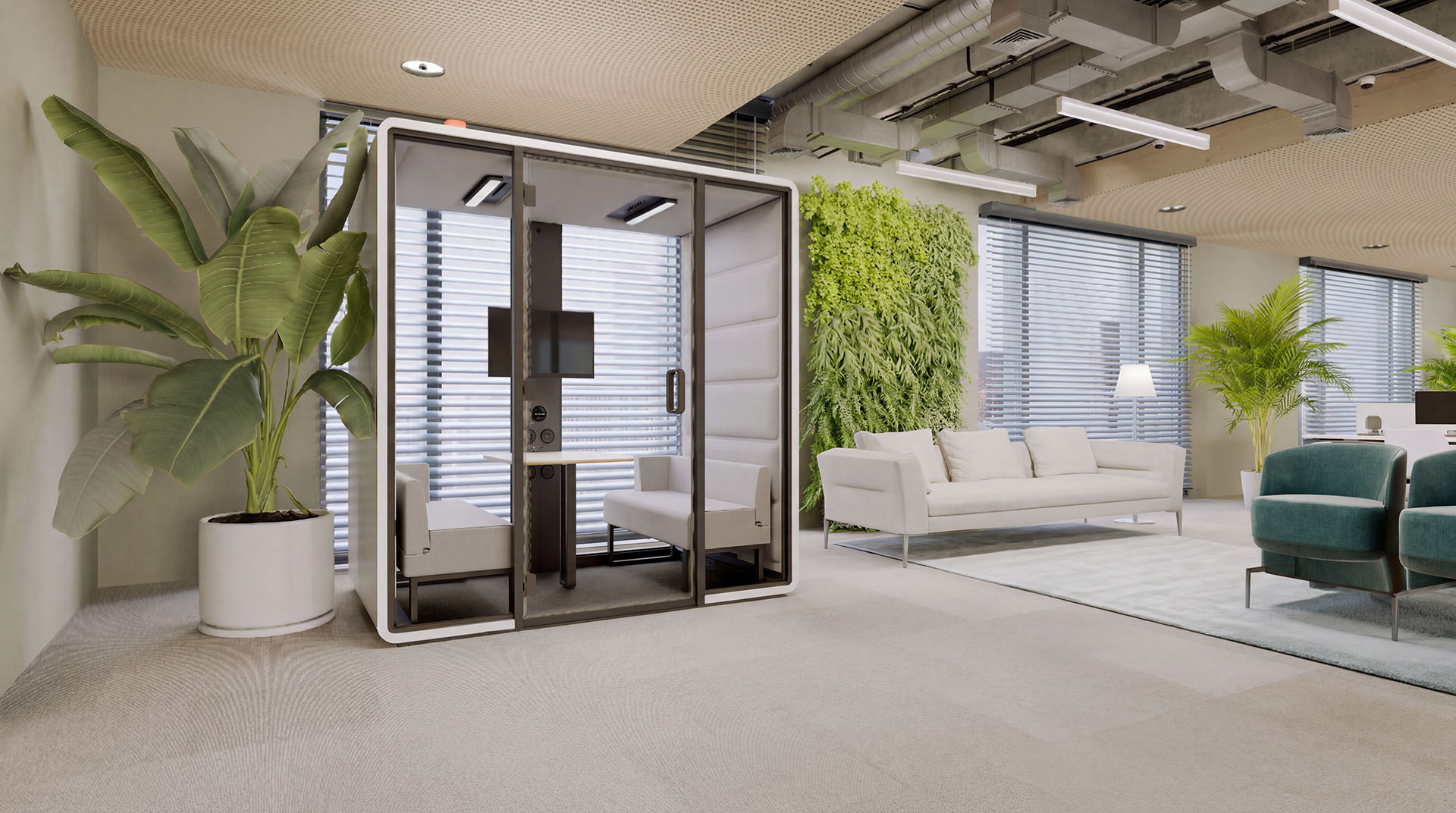
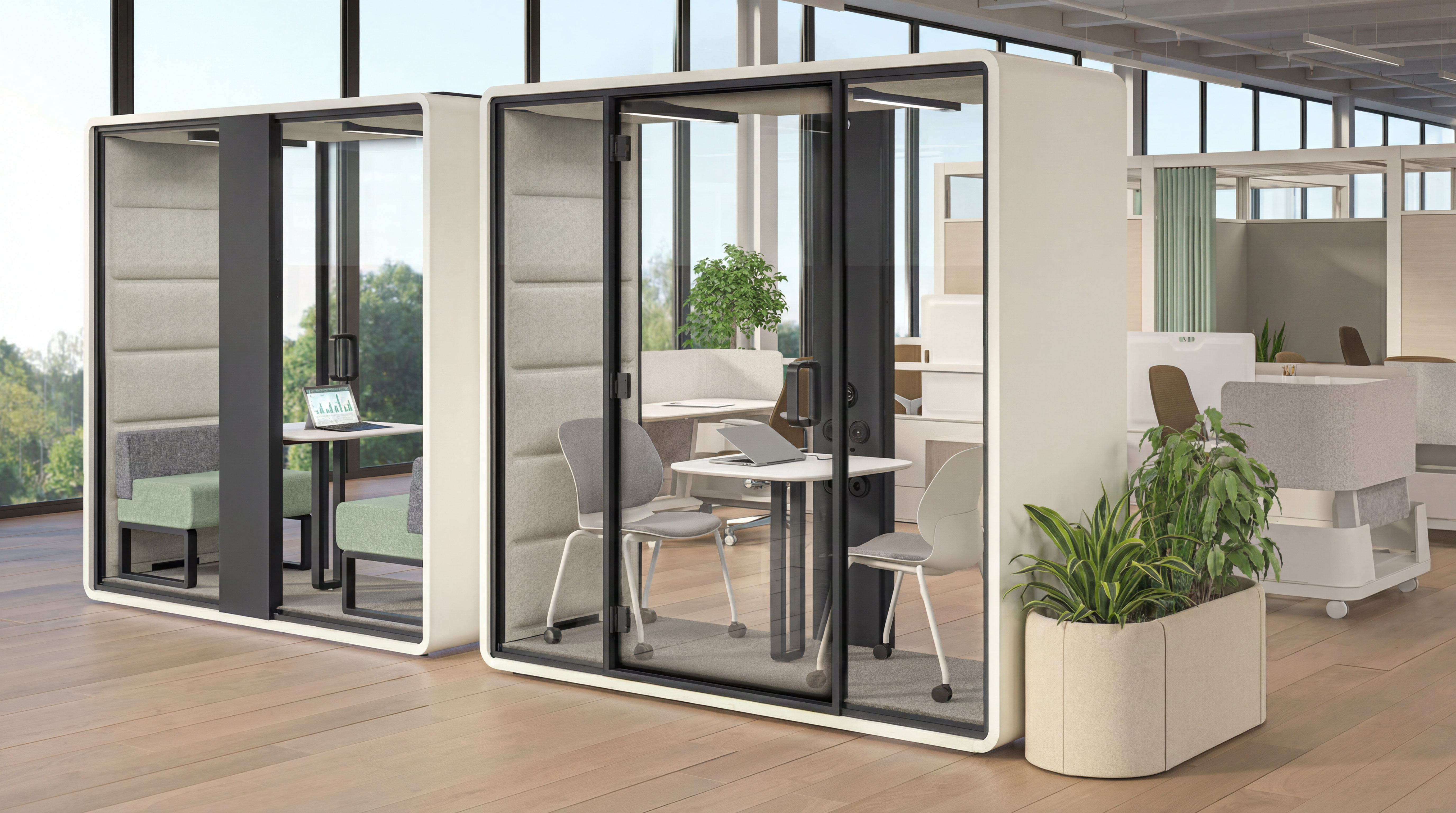
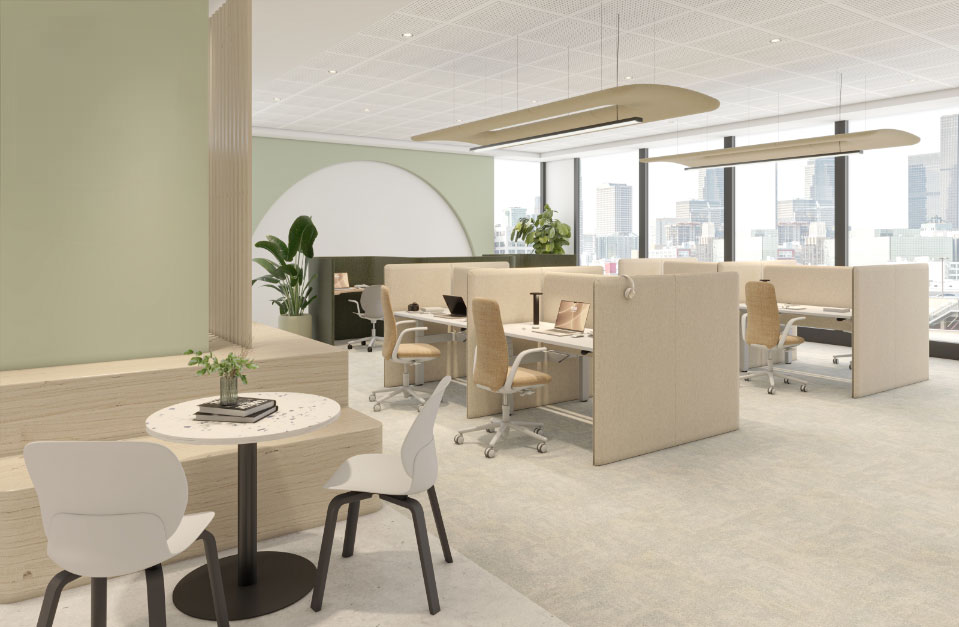
Acoustics isn’t solved by a single product. It comes from a layered ecosystem of spaces, each tuned for how people work and how sound should behave.
Explore how your workplace can tune its sound mix.



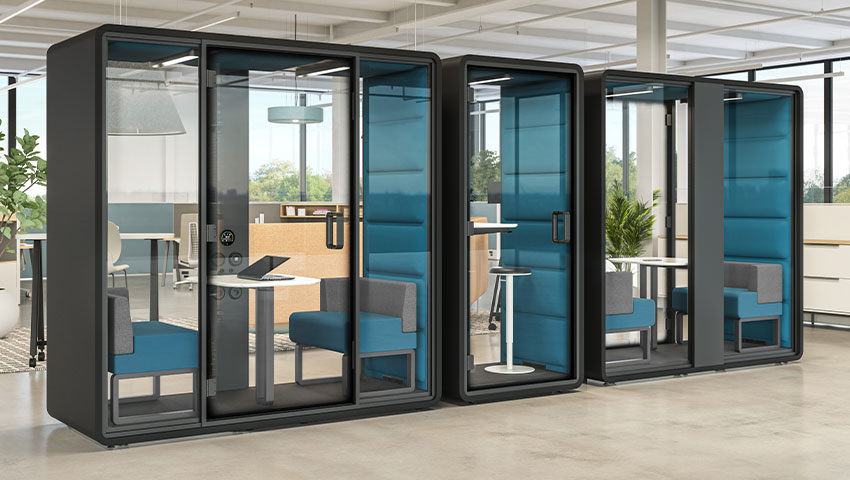
Not sure which pod
is right for you?
Answer 4 quick questions and we'll match you with the right acoustic workspace from our full range of 14 pods.
Acoustic Ecosystems in Practice
Every workplace is different, but the most successful acoustic environments share a common approach: combining planning, absorption, zoning, and privacy solutions to support people throughout the day.
ManpowerGroup HQ
Madrid, Spain
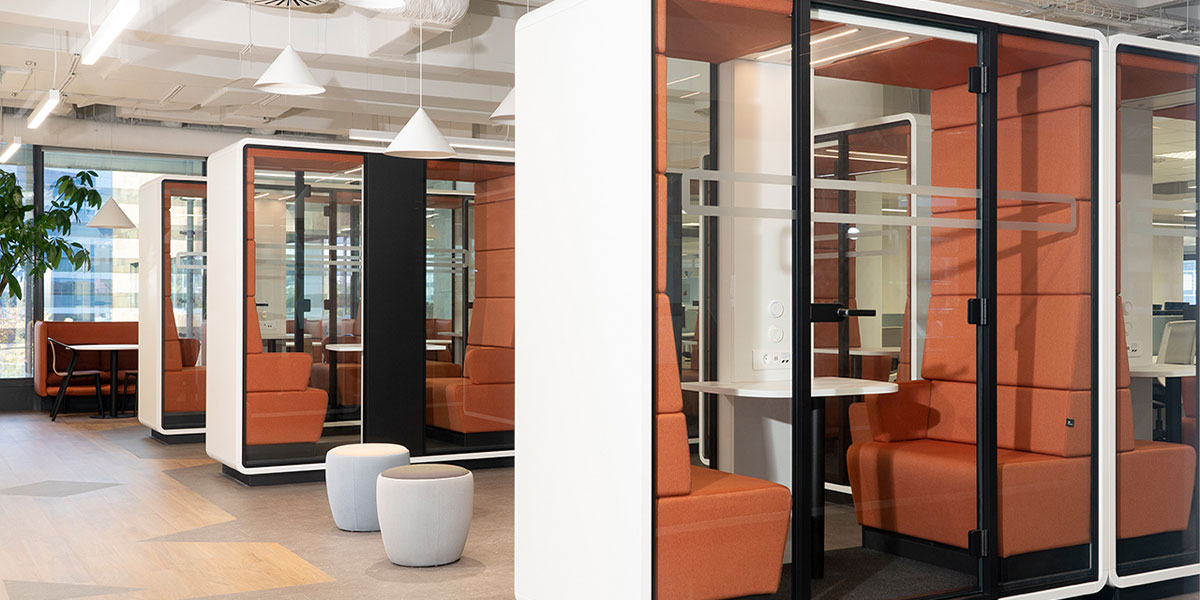
Challenge
Create a workplace that supports focus, collaboration, and employee well-being while accommodating diverse workstyles in an open-plan environment.
Solution
Implemented activity-based settings, acoustic zoning, and dedicated areas for focused work, collaboration, and employee well-being.
Henkel Global
Amsterdam, Netherlands
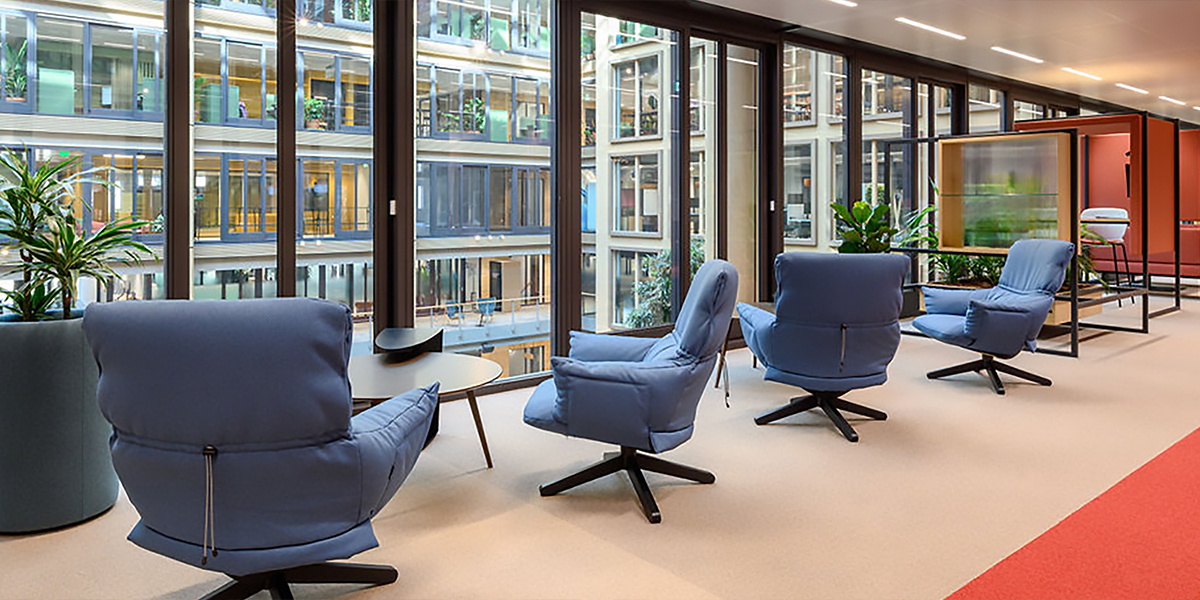
Challenge
Create an engaging, hospitality-inspired workplace that encourages collaboration while maintaining comfort and minimizing acoustic distractions.
Solution
Used textile ceiling installations, curtains, and varied acoustic solutions to reduce noise, define spaces, and support collaboration.
Synopsys
Porto, Portugal
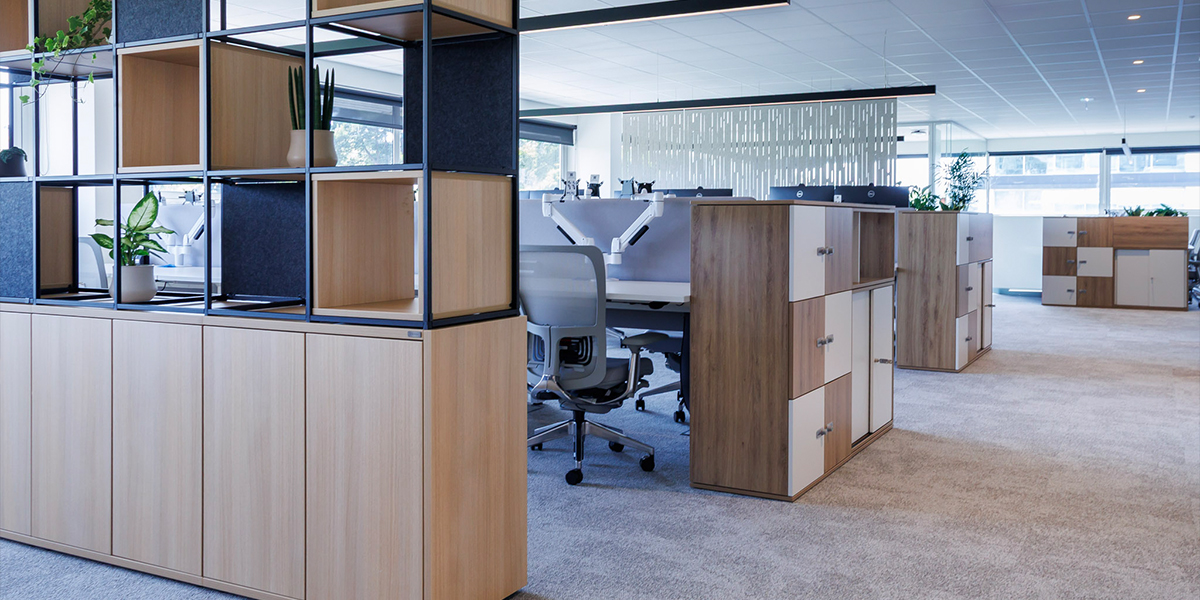
Challenge
Support growth and collaboration in an expanded office while maintaining acoustic comfort and flexibility within an open-plan setting.
Solution
Combined acoustic pods, sound-absorbing lighting, flexible partitions, and distributed collaboration spaces across the workplace.
Frequently Asked Questions
About Workplace Acoustics
Key Terms
Decibel (dB / dBA)
Unit used to measure sound level. A 3 dB increase is roughly double the sound energy - small shifts create noticeable differences.
ISO 23351-1
International standard for acoustic performance of office pods and booths - the benchmark for specification confidence.
-
1. What are workplace acoustics?
Workplace acoustics refer to how sound behaves within an office environment and how that sound affects focus, collaboration, speech privacy, well-being, and overall employee experience. Effective workplace acoustics combine workplace planning, acoustic products, and architectural treatments to create environments that support different work activities.
-
2. Why are acoustics important in the workplace?
Acoustics directly affect concentration, communication, privacy, and comfort. Poor acoustic conditions can increase distractions, reduce productivity, and make it difficult for employees to focus or collaborate effectively. Well-designed acoustic environments help people perform different types of work more comfortably and efficiently.
-
3. What causes poor office acoustics?
Poor office acoustics are typically caused by excessive reverberation, open-plan layouts, hard reflective surfaces, uncontrolled speech noise, and a lack of acoustic separation between activities. Acoustic problems often occur when collaborative, social, and focus activities share the same environment without appropriate zoning or sound control measures.
-
4. What is an acoustic ecosystem?
An acoustic ecosystem is a coordinated combination of workplace planning, zoning, acoustic products, and architectural treatments that work together to manage sound throughout an office. Instead of relying on a single solution, an acoustic ecosystem combines absorption, blocking, containment, and activity-based planning to create balanced acoustic conditions.
-
5. What are the four principles of workplace acoustics?
The four principles of workplace acoustics are:
- Absorb: Reduce reverberation and reflected sound.
- Block: Limit sound transmission between areas.
- Contain: Keep conversations and activity sound within dedicated settings.
- Displace: Locate activities in acoustically appropriate spaces.
Together, these principles help create a balanced workplace soundscape.
-
6. How do sound absorption and sound blocking differ?
Sound absorption reduces sound reflections within a space and helps control reverberation. Examples include acoustic ceilings, wall panels, acoustic lighting, and upholstered furniture.
Sound blocking reduces sound transmission between people or spaces. Examples include acoustic screens, room dividers, walls, doors, and enclosed acoustic pods.
-
7. How do acoustic pods improve workplace performance?
Acoustic pods provide enclosed spaces for calls, focused work, confidential conversations, and hybrid meetings. By containing speech and reducing external distractions, acoustic pods help improve speech privacy, concentration, and user comfort in open-plan workplaces.
-
8. What acoustic performance should an office pod provide?
For workplace speech privacy, acoustic pods should be independently tested according to ISO 23351-1. In most office environments, Class A and Class B pods provide reliable speech privacy, with Class A pods achieving more than 30 dB of speech reduction and Class B pods achieving more than 25 dB.
-
9. What is ISO 23351-1?
ISO 23351-1 is the international standard used to evaluate the acoustic performance of office pods and booths. The standard measures speech level reduction outside the enclosure and classifies products according to their ability to provide speech privacy.
-
10. How much speech reduction is needed for speech privacy?
A speech level reduction of at least 25 dB is generally recommended to support speech privacy in a typical office environment. Higher levels of reduction provide greater confidentiality and reduce the risk of conversations being understood outside the enclosure.
-
11. What acoustic solutions work best in open-plan offices?
The most effective open-plan office strategies combine multiple acoustic layers, including acoustic ceilings, acoustic lighting, wall treatments, screens, office dividers, soft seating, rugs, and acoustic pods. Layered solutions generally perform better than a single acoustic intervention.
-
12. How do acoustics support focus work?
Acoustics support focus work by reducing distractions, managing speech noise, improving privacy, and creating calmer environments. Research cited in the guide indicates that 89% of employees need quiet spaces for focused work and that interruptions can significantly affect concentration.
-
13. How do acoustics support hybrid work?
Acoustics support hybrid work by providing dedicated settings for video calls, virtual meetings, and confidential conversations. Acoustic pods and enclosed meeting spaces help create speech clarity and privacy for both in-person and remote participants.
-
14. What is reverberation time (RT60)?
RT60, or reverberation time, measures how long sound remains in a space after the source has stopped. Lower reverberation times generally improve speech clarity and create a more comfortable acoustic environment. RT60 is one of the most common metrics used to evaluate room acoustics.
-
15. When should acoustics be considered in workplace design?
Acoustics should be considered at the beginning of the workplace design process. Early acoustic planning allows organisations to align floorplate layout, activity zones, furniture selection, and acoustic performance requirements before problems arise.
-
16. How can organisations improve workplace acoustics without construction?
Organisations can improve workplace acoustics by introducing acoustic pods, office dividers, desk screens, acoustic lighting, wall panels, soft seating, rugs, and other freestanding acoustic solutions. These products can improve comfort, privacy, and speech control without major architectural modifications.
More Acoustic Solutions
Learn more about creating an acoustic workspace and how it can benefit your productivity and well-being.